Introduction
The way businesses buy and sell has changed dramatically. Today, companies no longer rely solely on cold calls, trade shows, or lengthy procurement cycles to find suppliers or customers. Online B2B platforms have transformed how business-to-business commerce works — making transactions faster, smarter, and more scalable than ever before.
Whether you’re a manufacturer looking for buyers, a distributor seeking new supply chains, or a business trying to reduce procurement costs, the right B2B platform can open doors that traditional channels simply can’t. In this guide, we’ll explore what online B2B platforms are, why they matter, and how to choose the best solution for your business ur goals.
What Are Online B2B Platforms?
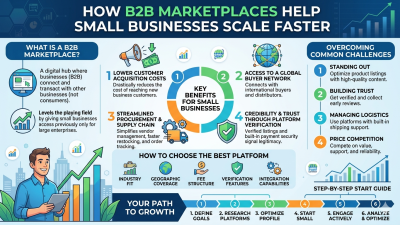
Online B2B platforms are digital ecosystems where businesses connect, negotiate, and transact with other businesses. Unlike B2C (business-to-consumer) platforms where companies sell to individual shoppers, B2B platforms facilitate bulk transactions, custom pricing, contract-based relationships, and long-term procurement partnerships.
These platforms come in several forms:
- B2B ecommerce platforms — dedicated storefronts for businesses to sell products or services directly to other companies online
- B2B online marketplaces — multi-vendor environments where multiple suppliers and buyers interact within a single digital space
- Business to business marketplaces — industry-specific or general hubs that aggregate supply and demand across a wide variety of product categories
Each model serves a different purpose, but all share a common goal: reducing friction in business commerce and enabling companies to scale faster.
Key Benefits of Using a B2B Online Marketplace
Adopting a B2B online marketplace offers measurable advantages for both buyers and sellers. Here’s why more companies are making the shift:
1. Expanded Market Reach
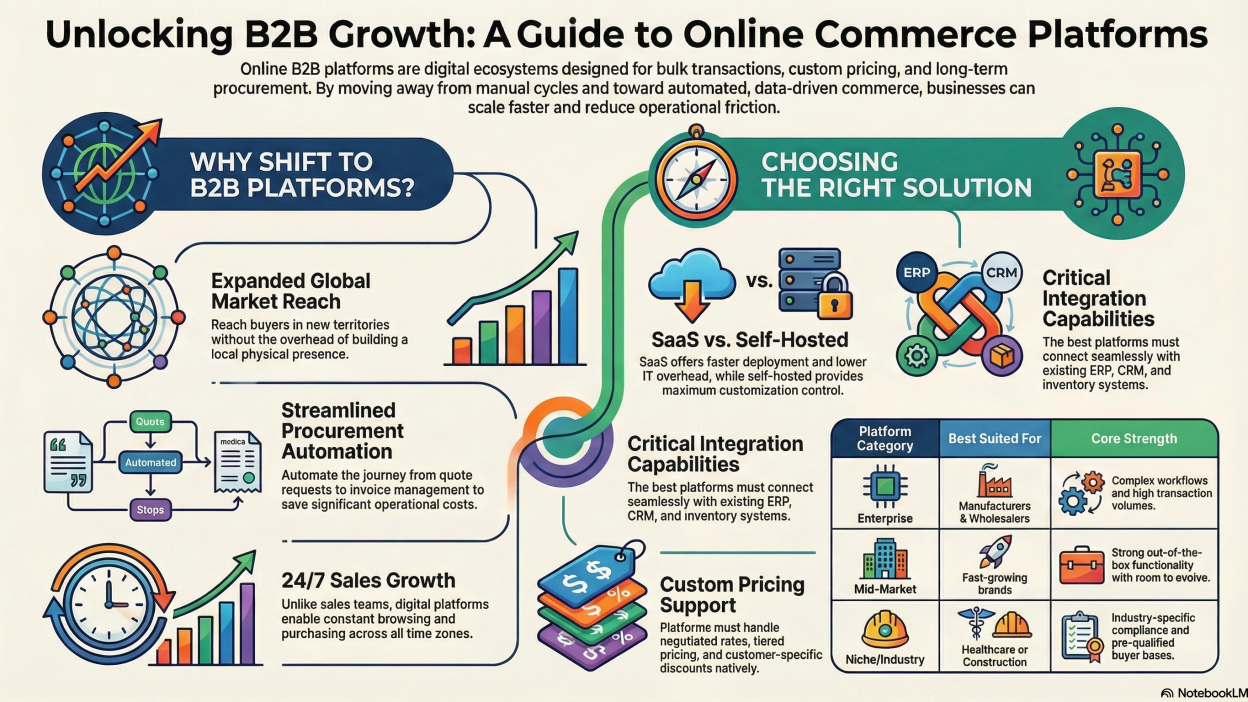
Traditional sales channels are limited by geography, relationships, and sales team capacity. A B2B online marketplace breaks those barriers. Sellers can reach buyers in new cities, countries, and industries — without the overhead of building a local presence. Buyers gain access to a global pool of verified suppliers, giving them more options and leverage in negotiations.
2. Streamlined Procurement and Sales
Manual procurement is time-consuming and error-prone. Online platforms automate many steps in the buying journey — from product discovery and quotation requests to order placement and invoice management. For businesses processing dozens or hundreds of orders per month, this automation can save significant time and operational costs.
3. Data-Driven Decision Making
Most modern B2B platforms provide analytics dashboards that offer deep visibility into buying patterns, top-performing products, customer behavior, and sales trends. This data empowers businesses to make informed decisions, optimize pricing, forecast demand, and identify new growth opportunities.
4. Improved Buyer Trust and Transparency
Business buyers need confidence before committing to large orders. Reputable business to business marketplaces often include verified seller profiles, product reviews, transparent pricing structures, and clear return or dispute policies — all of which build trust and reduce purchasing hesitation.
5. Lower Customer Acquisition Costs
Listing products or services on an established marketplace means tapping into an existing audience. Instead of spending heavily on advertising and outbound sales to build awareness from scratch, sellers benefit from the platform’s built-in traffic, SEO authority, and active buyer base.
What Makes the Best B2B Marketplace Platform?
Not all platforms are created equal. When evaluating the best B2B marketplace platform for your business, there are several critical factors to consider:
Robust Catalog and Product Management
Look for platforms that support complex product catalogs, including variants, configurable products, bulk pricing tiers, and minimum order quantities. Businesses with large or specialized inventories need flexible catalog management to accurately represent their offerings.
Custom Pricing and Contract Support
B2B commerce rarely uses one-size-fits-all pricing. The best platforms support customer-specific pricing, negotiated rates, quote-based selling, and contract management — features that are essential for maintaining long-term business relationships.
Integration Capabilities
Your B2B platform should connect seamlessly with your existing ERP, CRM, inventory management, and accounting systems. Siloed data creates inefficiencies. Platforms with strong API capabilities and pre-built integrations reduce manual data entry and keep operations synchronized.
Scalability
As your business grows, your platform should grow with it. Choose a solution that can handle increasing transaction volumes, more SKUs, additional users, and multi-location or multi-region selling without performance degradation.
Mobile and Self-Service Capabilities
Modern B2B buyers expect the same convenience they experience as consumers. A strong B2B online portal with mobile access, self-service account management, order tracking, and reorder functionality improves buyer satisfaction and reduces the burden on your sales team.
Top B2B Ecommerce Platforms: What to Look For
The market for B2B ecommerce platforms is growing rapidly, and businesses have more choices than ever. Here are the key categories and what each is best suited for:
Enterprise B2B Ecommerce Platforms
Designed for large organizations with complex workflows, high transaction volumes, and multi-channel selling needs. These platforms typically offer advanced customization, enterprise-grade security, and deep integration ecosystems. Best for: manufacturers, large wholesalers, and national distributors.
Mid-Market B2B Platforms
A strong middle ground for growing companies that need more than a basic store but aren’t yet at enterprise scale. These best B2B ecommerce platforms offer strong out-of-the-box functionality with room to customize as needs evolve. Best for: regional distributors, specialty suppliers, and fast-growing brands.
Niche and Industry-Specific Marketplaces
Some of the top B2B ecommerce platforms are purpose-built for specific industries — such as healthcare, construction, food service, or electronics. These offer industry-specific compliance features, category expertise, and a pre-qualified buyer base already familiar with the product types on offer.
Self-Hosted vs. SaaS Platforms
Businesses must also choose between self-hosted solutions (greater control, higher maintenance) and SaaS platforms (faster deployment, lower IT overhead). Most growing companies favor SaaS for its scalability and continuous feature updates, while larger enterprises may prefer self-hosted for customization control.
How a B2B Ecommerce Platform Drives Sales Growth
Moving to a dedicated B2B ecommerce platform isn’t just about digitizing your order process — it’s a growth lever. Here’s how:
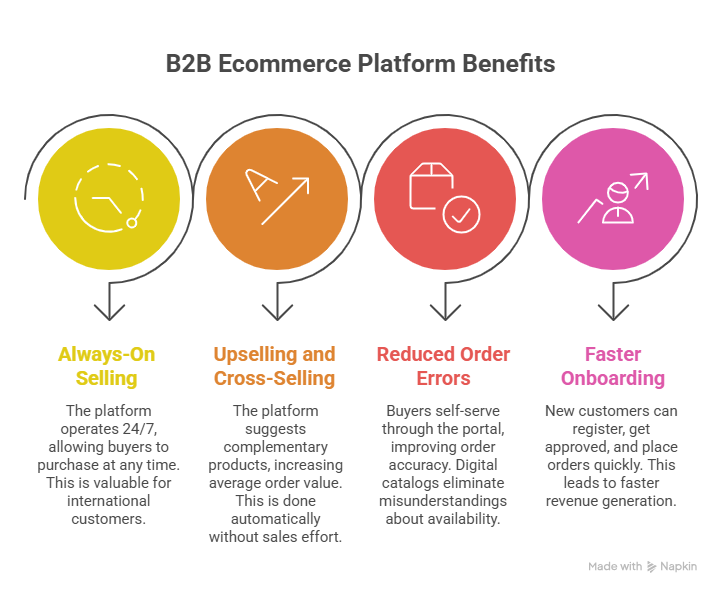
Always-On Selling
Unlike a sales team that works business hours, a B2B ecommerce platform operates 24/7. Buyers can browse, compare, and purchase at any time, from anywhere. This is especially valuable for businesses selling across multiple time zones or to international customers.
Upselling and Cross-Selling at Scale
Digital platforms can be configured to suggest complementary products, display frequently bought together items, and surface related offerings — all automatically. This increases average order value without requiring additional sales effort.
Reduced Order Errors
When buyers self-serve through a structured online portal rather than communicating via email or phone, order accuracy improves significantly. Digital catalogs with real-time inventory data eliminate misunderstandings about availability, pricing, and specifications.
Faster Onboarding for New Buyers
A well-designed B2B online portal allows new customers to register, get approved, access pricing, and place their first order quickly — without waiting for a sales rep to manually walk them through the process. Faster onboarding means faster revenue.
Business to Business Marketplaces: Building a Broader Ecosystem
Beyond individual storefronts, business to business marketplaces create powerful network effects. When many buyers and sellers participate in the same ecosystem, the value grows for everyone.
For sellers, marketplaces offer discovery opportunities that a standalone website simply can’t match. For buyers, they provide a one-stop destination to compare multiple vendors, evaluate pricing, and consolidate purchasing — reducing the need to manage relationships with dozens of different supplier portals.
Industries that have embraced B2B marketplaces most aggressively include:
- Manufacturing and industrial goods — connecting OEMs with component suppliers
- Wholesale and distribution — enabling retailers and resellers to stock up efficiently
- Professional services — platforms matching agencies, consultants, and service providers with corporate clients
- Technology and SaaS — marketplaces for software, APIs, and cloud services
Participating in a marketplace can be a powerful complement to operating your own branded storefront, giving businesses both brand control and marketplace visibility.
Choosing the Best B2B Platform for Your Business
With so many options available, selecting the right solution starts with an honest assessment of your business needs. Consider the following questions:
What is your transaction volume? High-volume businesses need platforms with robust performance, automation, and reliability guarantees.
How complex is your pricing? If you have tiered pricing, contract-based rates, or customer-specific discounts, ensure the platform supports these natively.
What systems do you need to integrate? Inventory, ERP, and CRM integration requirements should heavily influence your platform selection.
Are you looking for marketplace presence or a branded storefront? Some businesses benefit most from listing on established marketplaces; others need a branded B2B storefront to maintain customer relationships and loyalty.
What’s your budget and internal IT capacity? SaaS platforms reduce implementation burden; enterprise platforms offer more power but require dedicated resources.
The best B2B platforms are not necessarily the biggest or the most feature-rich — they’re the ones that align with your specific growth stage, industry, and operational needs.
The Role of the B2B Online Portal in Customer Retention
A well-built B2B online portal is more than a sales channel — it’s a relationship management tool. When buyers can log in to view their order history, track shipments, access invoices, request quotes, and manage their account independently, they’re more likely to return.
Self-service capability reduces friction for repeat buyers and signals that you value their time. It also frees your sales and customer service teams to focus on high-value activities — like growing key accounts and resolving complex issues — rather than answering routine order inquiries.
Portals with personalized dashboards, saved order lists, and account-level promotions further strengthen loyalty by making each buyer feel like the platform was built specifically for them.
Frequently Asked Questions
What is a B2B online marketplace?
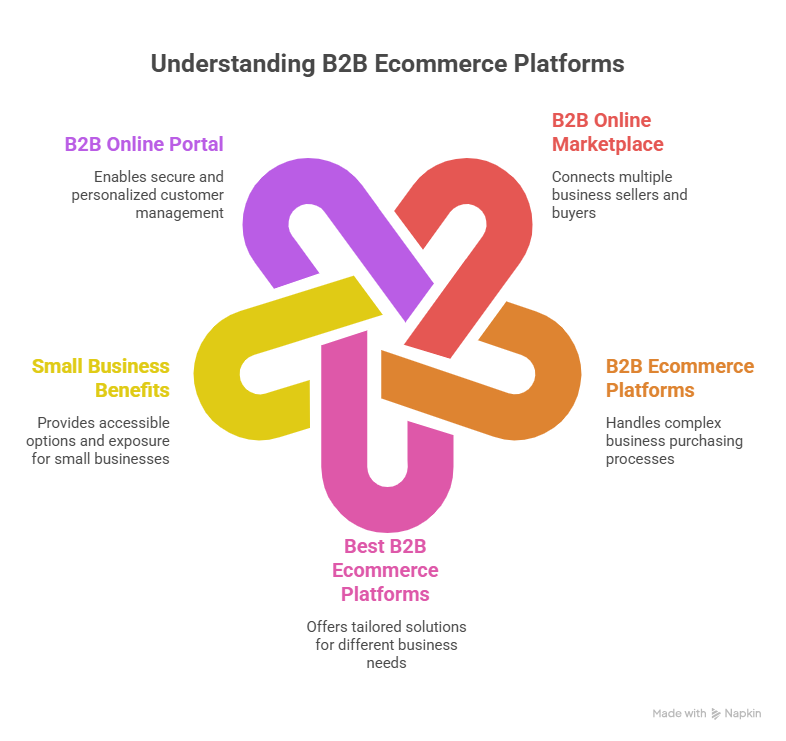
A B2B online marketplace is a digital platform where multiple business sellers and buyers interact within a shared environment. It aggregates supply and demand, enabling buyers to compare vendors and products, and giving sellers access to a ready pool of business buyers without needing to build their own storefront from scratch.
How are B2B ecommerce platforms different from B2C platforms?
B2B ecommerce platforms are designed to handle the complexity of business purchasing — including bulk ordering, custom pricing, multi-user accounts, purchase approvals, and contract management. B2C platforms focus on individual consumer transactions, which are simpler and typically involve lower order values.
What are the best B2B ecommerce platforms available today?
The best B2B ecommerce platforms depend on your business size, industry, and needs. Enterprise-level options offer deep customization and integration, while mid-market and SaaS platforms provide faster deployment and strong out-of-the-box features. Evaluating platforms based on your specific catalog complexity, buyer experience needs, and integration requirements will lead you to the right fit.
Can small businesses benefit from B2B platforms?
Absolutely. Many best B2B platforms offer tiered pricing or marketplace models that make them accessible to smaller businesses. Joining an established B2B marketplace, in particular, allows small suppliers to gain exposure to large buyers without significant upfront investment.
What is a B2B online portal?
A B2B online portal is a secure, personalized web interface where business customers can manage their relationship with a supplier — browsing products, placing orders, tracking shipments, viewing invoices, and managing account details — without needing to contact a sales representative for every interaction.