Introduction
The way businesses buy and sell has changed forever. Today, companies of all sizes are turning to online B2B platforms to streamline operations, reach new markets, and close deals faster than ever before.
Whether you run a manufacturing unit, a wholesale distribution company, or a service-based enterprise, the benefits of B2B ecommerce are too significant to ignore. A modern B2B ecommerce platform removes traditional barriers — geographic limits, slow paperwork, and middlemen — replacing them with digital efficiency and real-time data.
In this article, we break down the key benefits of using online B2B platforms and why your business should make the shift today.
What Are Online B2B Platforms?
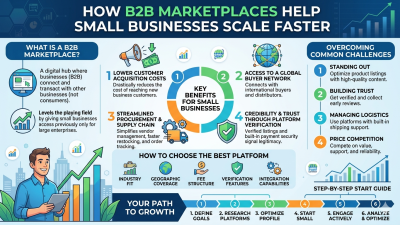
Online B2B platforms are digital marketplaces or ecommerce ecosystems where businesses transact with other businesses. Unlike B2C (business-to-consumer) retail, B2B transactions involve bulk orders, negotiated pricing, credit terms, and long-term supplier relationships.
A B2B online marketplace connects buyers and sellers across industries — from raw materials and components to finished goods and professional services — all in a single, searchable digital environment.
Examples include platforms like Alibaba, IndiaMART, Amazon Business, and ThomasNet, among many industry-specific platforms.
Top Benefits of Using Online B2B Platforms
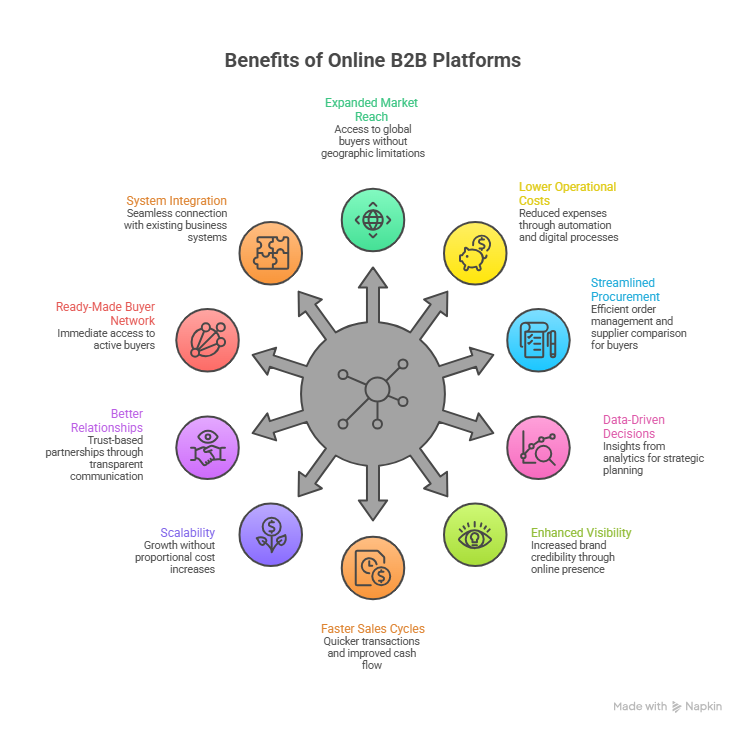
1. Expanded Market Reach Without Geographic Limits
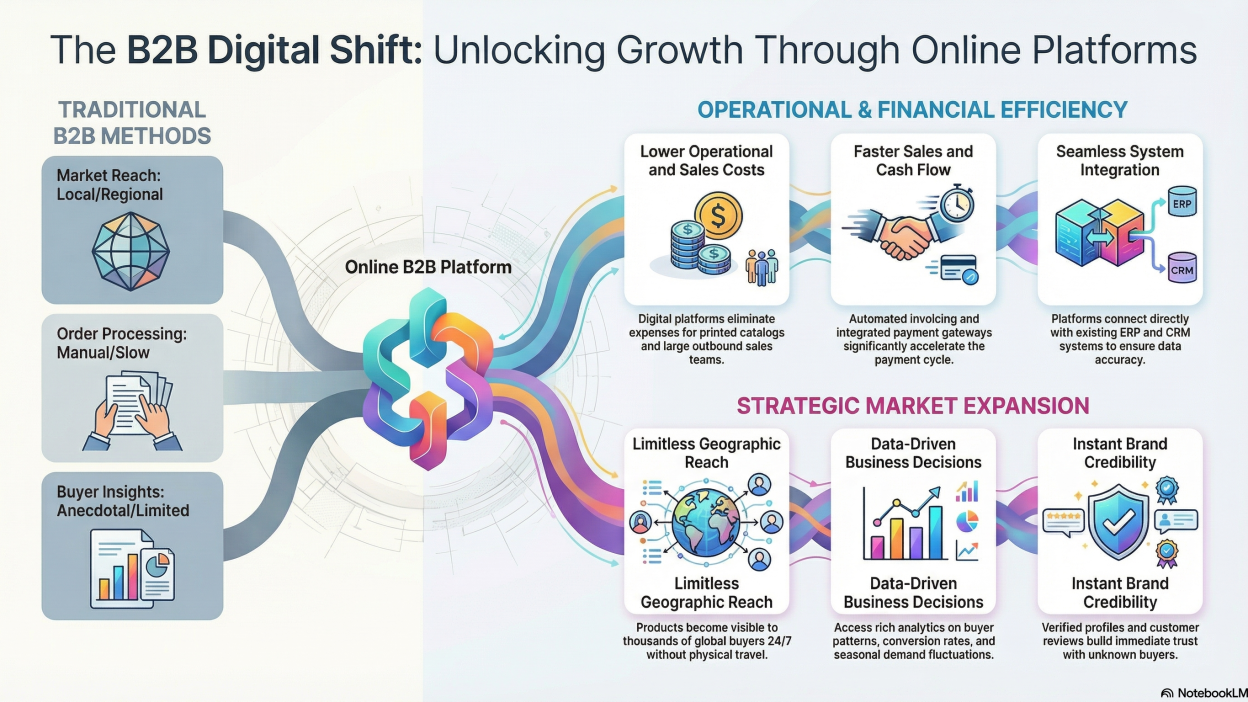
One of the most powerful advantages of B2B ecommerce is the ability to sell beyond your local or regional market. Traditional B2B sales relied heavily on physical trade shows, sales representatives, and printed catalogs — all expensive and limited in scope.
With a B2B online marketplace, your products and services become visible to thousands of potential buyers globally. Businesses in other states, countries, or continents can discover, evaluate, and purchase from you — 24 hours a day, 7 days a week.
This level of exposure was previously reserved for large enterprises with massive sales budgets. Online platforms have leveled the playing field for SMEs and growing businesses.
2. Lower Operational and Sales Costs
The benefits of ecommerce for a business are most evident when looking at cost savings. Digital B2B platforms eliminate or significantly reduce costs associated with:
- Printed catalogs and brochures
- Physical trade show participation
- Large in-house sales teams for outbound prospecting
- Manual order processing and paperwork
Automating workflows such as quote generation, order management, and invoice processing directly translates into reduced overhead. These savings can be redirected toward product development, customer service, or marketing — all of which drive further growth.
3. Streamlined Procurement and Order Management
For buyers, the benefits of B2B platforms are equally compelling. Procurement teams no longer need to juggle multiple supplier contacts, emails, and spreadsheets. A centralized platform allows them to:
- Compare multiple suppliers side by side
- View real-time inventory availability
- Place bulk orders with a few clicks
- Track deliveries and manage returns easily
This streamlining reduces procurement cycle times dramatically. Businesses that used to spend days processing orders can complete the same tasks in hours — improving overall supply chain efficiency.
4. Data-Driven Business Decisions
A major ecommerce business benefit that often goes overlooked is access to rich, actionable data. Online B2B platforms generate detailed analytics on:
- Which products are viewed most
- Conversion rates from inquiry to purchase
- Customer buying patterns and order frequency
- Seasonal demand fluctuations
This data empowers businesses to make smarter inventory decisions, refine pricing strategies, and personalize their outreach. Traditional offline sales channels rarely offered this level of insight.
5. Enhanced Visibility and Brand Credibility
Being listed on a reputable B2B online marketplace instantly adds credibility to your brand. Verified seller profiles, customer reviews, ratings, and certifications signal trustworthiness to potential buyers who may not have heard of your company before.
For newer businesses, this is a critical advantage. Instead of spending years building brand recognition through offline channels, you can establish credibility quickly by maintaining a well-optimized profile and collecting positive buyer feedback.
6. Faster Sales Cycles and Improved Cash Flow
Speed is one of the most valued benefits of ecommerce in the B2B world. Digital platforms allow buyers to make faster purchase decisions with all the information they need at their fingertips — product specs, certifications, pricing tiers, and minimum order quantities.
Integrated payment gateways also ensure that transactions are processed swiftly and securely. Many platforms now offer B2B-specific features such as:
- Net payment terms (Net 30, Net 60)
- Credit line management
- Automated invoicing and reminders
These features accelerate cash flow cycles, which is particularly beneficial for small and medium-sized businesses managing tight working capital.
7. Scalability Without Proportional Cost Increases
One of the standout benefits of using online B2B platforms is the ability to scale your operations without a linear increase in costs. Adding new product lines, entering new markets, or managing more orders does not necessarily require hiring more people or expanding physical infrastructure.
Cloud-based B2B platforms grow with your business. Features like automated catalog management, multi-warehouse inventory syncing, and CRM integrations mean you can handle significantly higher volumes with the same team.
8. Better Supplier and Buyer Relationships
Long-term, trust-based relationships are the backbone of B2B commerce. Online platforms support relationship-building through features like:
- Dedicated communication channels
- Order history tracking for repeat buyers
- Customized pricing for loyal clients
- RFQ (Request for Quotation) tools for large custom orders
When suppliers and buyers have access to transparent transaction records and easy communication tools, disputes are minimized and partnerships become more durable.
9. Access to a Ready-Made Buyer Network
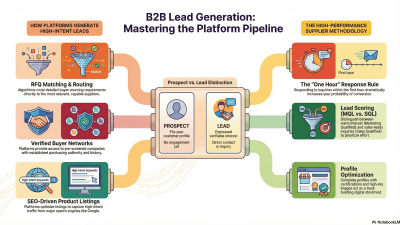
Starting from scratch in a new market is expensive and time-consuming. A B2B ecommerce platform with an existing buyer network gives sellers immediate access to thousands of active, intent-driven buyers.
Rather than spending months on outbound lead generation, businesses can list their products and start receiving inquiries almost immediately. This is especially valuable for companies entering new verticals or testing a product’s market viability before scaling.
10. Integration With Existing Business Systems
Modern online B2B platforms are built for integration. They connect seamlessly with ERP systems (SAP, Oracle, Microsoft Dynamics), CRM tools (Salesforce, HubSpot), accounting software (QuickBooks, Tally), and shipping providers.
This interoperability ensures that data flows consistently across your business — from order placement to fulfillment to financial reconciliation — without manual intervention. The result is a leaner, more agile operation that responds faster to market changes.
Key Industries Benefiting From B2B Online Platforms
The advantages of B2B ecommerce span across virtually every sector:
Manufacturing: Faster raw material procurement and larger buyer networks for finished goods.
Wholesale and Distribution: Real-time inventory management and automated order routing.
Agriculture: Direct access to food processing companies and export markets.
Healthcare and Pharma: Compliant procurement of medical supplies and pharmaceutical ingredients.
Textiles and Apparel: Connecting fabric manufacturers with garment exporters globally.
Industrial Equipment: Showcasing heavy machinery to verified industrial buyers with RFQ functionality.
Common Challenges and How Platforms Address Them
While the benefits of ecommerce for B2B are substantial, businesses do face initial challenges during adoption:
Challenge: Resistance to change from sales teams Solution: Platforms now offer hybrid models that combine digital self-service with human-assisted sales for complex deals.
Challenge: Concerns about data security Solution: Reputable B2B platforms use enterprise-grade encryption, two-factor authentication, and GDPR-compliant data practices.
Challenge: Complex product configurations Solution: Advanced catalog tools support configurable products, custom attributes, and tiered pricing structures.
Challenge: Integration complexity Solution: Most platforms offer ready-made connectors and APIs for popular business systems, reducing implementation time.
How to Choose the Right B2B Ecommerce Platform
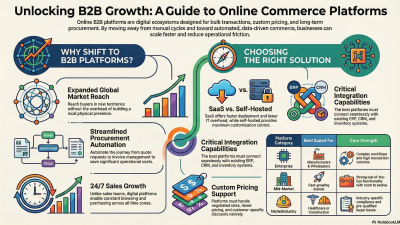
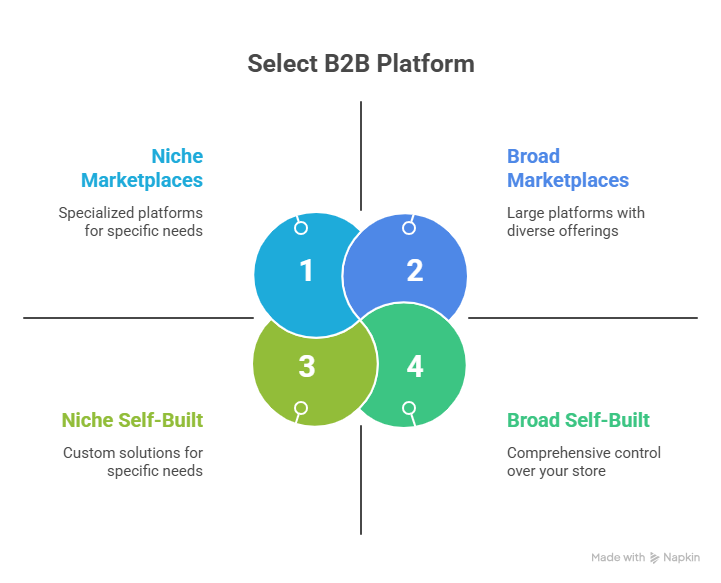
With dozens of platforms available, choosing the right one depends on your business goals:
For global reach: Platforms like Alibaba or Global Sources are ideal for manufacturers and exporters looking to connect with international buyers.
For domestic B2B markets in India: IndiaMART, TradeIndia, or Udaan serve local wholesale and distribution needs effectively.
For Amazon’s B2B ecosystem: Amazon Business works well for businesses selling office, industrial, or tech products to corporate buyers.
For building your own branded B2B store: Solutions like Shopify Plus, Magento, or OroCommerce let you create a dedicated storefront with full control over branding and customer data.
When evaluating platforms, consider: catalog size limits, transaction fees, integration capabilities, buyer base quality, and customer support responsiveness.
FAQ: Benefits of Using Online B2B Platforms
Q: What is the biggest advantage of using a B2B online marketplace?
The biggest advantage is access to a large, ready-made network of buyers or suppliers, which dramatically reduces the time and cost of finding new business partners compared to traditional offline methods.
Q: Are B2B ecommerce platforms suitable for small businesses?
Absolutely. Many platforms offer free or low-cost listing options, making them accessible for startups and SMEs. The ability to reach a global audience without a large sales team is particularly valuable for smaller companies.
Q: How do B2B platforms differ from B2C ecommerce?
B2B platforms are designed for bulk purchases, negotiated pricing, credit terms, and multi-stakeholder approval workflows — features not found in standard B2C retail platforms.
Q: Can I use multiple B2B platforms at the same time?
Yes, many businesses list on multiple platforms to maximize visibility. Tools that sync product catalogs across platforms make managing multiple listings more efficient.
Q: What are the main benefits of ecommerce for a business in international trade?
For international trade, B2B ecommerce offers 24/7 visibility to global buyers, multi-currency payment support, digital documentation, and logistics integration — all of which simplify cross-border transactions significantly.