The digital landscape is shifting beneath our feet. If you still view B2B eCommerce as just a digital version of a paper catalog, you’re already behind. In 2026, the future of B2B eCommerce isn’t just about transactions; it’s about intelligent, self-service ecosystems that mirror the ease of B2C shopping while handling the extreme complexity of bulk business logistics.
With the global B2B market projected to hit nearly $36.16 trillion this year, the question isn’t whether you should go digital—it’s how fast you can adapt.
What is the Future of B2B eCommerce?
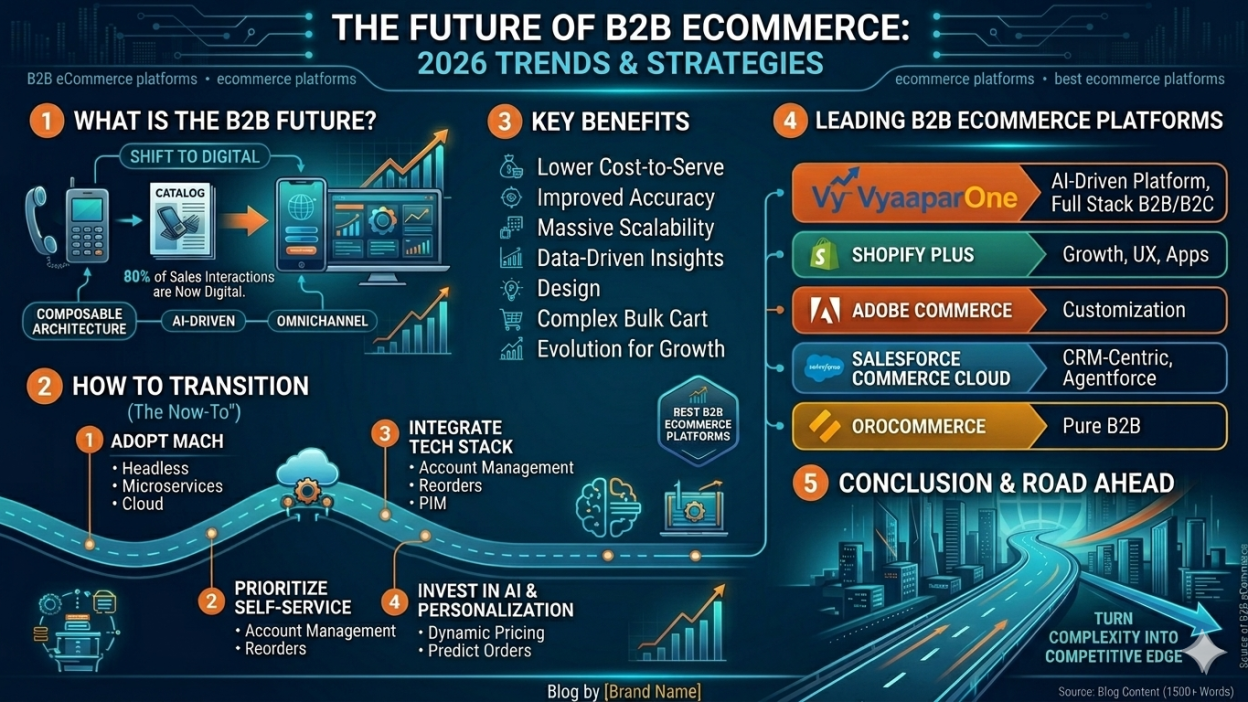
The B2B eCommerce future is defined by a “digital-first” mentality. Historically, B2B sales relied on handshakes, phone calls, and spreadsheets. Today, 80% of all B2B sales interactions between suppliers and buyers occur in digital channels.
The future is composable, AI-driven, and omnichannel. It’s an environment where a procurement manager can research a $100,000 industrial turbine on their mobile device, configure the specs via an AI chatbot, and finalize the contract through a self-service portal without ever speaking to a sales rep—unless they want to.
How to Transition to the Future of B2B eCommerce
The future of B2B ecommerce is fast, frictionless, and incredibly lucrative. As we move deeper into 2026, the gap between “digital leaders” and “digital laggards” will only widen. By choosing the right B2B eCommerce platforms and focusing on the buyer’s need for autonomy and speed, your business can turn the complexity of B2B into a competitive edge.
Moving into the next era of digital trade requires more than just a website; it requires a strategic overhaul. Here is how to prepare:
Adopt a Composable Architecture: Move away from rigid, “all-in-one” legacy systems. The best B2B eCommerce platforms now use MACH (Microservices, API-first, Cloud-native, and Headless) architecture. This allows you to swap out your payment gateway or search engine without rebuilding the entire site.
Prioritize Self-Service Portals: Modern buyers are “rep-shy.” They want to track orders, download invoices, and manage bulk reorders autonomously. Ensure your platform offers robust account management features.
Integrate Your Tech Stack: Your ecommerce platforms must talk to your ERP (Enterprise Resource Planning), CRM, and PIM (Product Information Management) systems. Real-time data on inventory and contract-specific pricing is non-negotiable.
Invest in AI and Personalization: Use AI to offer dynamic pricing and predictive ordering. If a client usually orders 500 units of a component every March, your system should suggest that order in February.
Benefits of Modern B2B eCommerce
Why are manufacturers and wholesalers sprinting toward the B2B ecommerce future? The advantages extend far beyond just “selling online.”
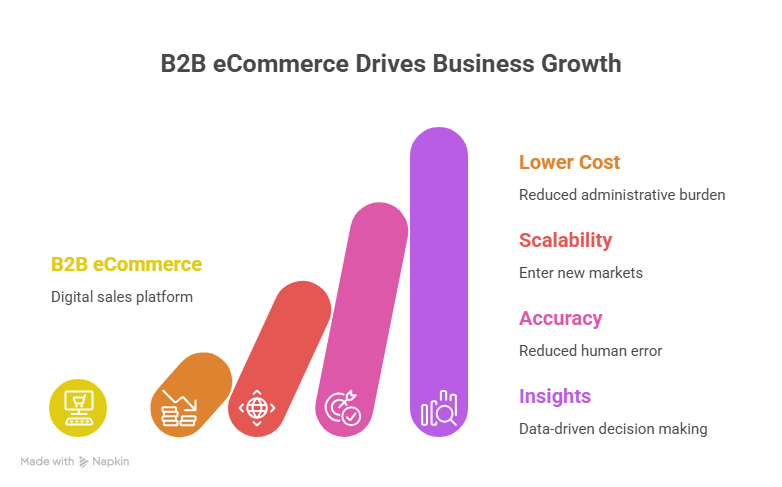
- Lower Cost-to-Serve: Automating routine orders reduces the administrative burden on your sales team, allowing them to focus on high-value acquisitions.
- Massive Scalability: Digital platforms allow you to enter new geographic markets without the overhead of physical sales offices.
- Improved Order Accuracy: Manual data entry is the enemy of B2B. Integrated B2B eCommerce platforms reduce human error in complex, multi-SKU orders.
- Data-Driven Insights: You gain a 360-degree view of buyer behavior, enabling you to optimize your supply chain and marketing spend.
Top B2B eCommerce Platforms to Watch in 2026
Choosing the best ecommerce platform depends on your business size and complexity. Here are the frontrunners for 2026:
| Platform | Best For | Key Feature |
| BigCommerce B2B Edition | Mid-Market to Enterprise | Strongest out-of-the-box B2B features and “Multi-Storefront” capabilities. |
| Shopify Plus | Rapid Growth Brands | Exceptional user experience and a massive app ecosystem for B2B. |
| Adobe Commerce | Complex Customization | Highly flexible for businesses with unique, deep-rooted legacy requirements. |
| Salesforce Commerce Cloud | CRM-Centric Businesses | Deep integration with Salesforce CRM and AI-powered “Agentforce” insights. |
| OroCommerce | Pure B2B Play | Built specifically for B2B from the ground up, avoiding B2C bloat. |
Frequently Asked Questions
Q: What is the biggest trend in the future of B2B eCommerce?
A: AI-powered personalization and Self-service. Buyers now expect the platform to know their contract terms, past order history, and even predict their future needs automatically.
Q: Can I use a B2C platform for B2B sales?
A: While some ecommerce platforms handle both, B2B requires specific features like bulk pricing, quote management, and corporate account hierarchies that basic B2C tools lack. Using a specialized B2B eCommerce solution is recommended.
Q: Is mobile commerce important for B2B?
A: Absolutely. Over 80% of B2B buyers use mobile devices at some point in their journey. A mobile-responsive design is no longer an “extra”—it’s a requirement.
Q: What makes a platform the “best ecommerce platform” for my business?
A: The “best” platform is the one that integrates seamlessly with your existing ERP and scales without requiring a total code rewrite every two years.