Introduction
Are you tired of running in circles looking for genuine leads for your import export business in India? You’re not alone. Thousands of traders, entrepreneurs, and small business owners across the country face the same challenge every single day — sourcing reliable buyers, finding trusted suppliers, and building a profitable trading network.
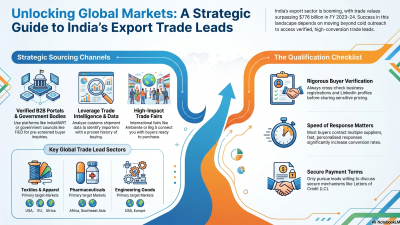
India is one of the world’s fastest-growing trade economies, with its total merchandise exports crossing $776 billion in FY 2023-24. The opportunity is enormous. But without the right strategy, the right contacts, and the right knowledge, breaking into or scaling an import export business in India feels like cracking a fortress wall.
This guide is your key.
Whether you are starting fresh, struggling to find buyers, hunting for the best import export business in India to enter, or trying to understand how to build a solid import export business plan, this article covers it all — step by step.
From proven import export business ideas to understanding import export business profit margins, finding import/export agents near me, and accessing leads you can actually convert — everything is broken down here in simple, actionable language.
Let’s solve the import export lead problem once and for all.
What Is an Import Export Business?
Before diving into strategies and solutions, it’s important to understand what an import export business actually involves and why it holds such massive potential in India’s growing economy.
Defining the Import Export Business
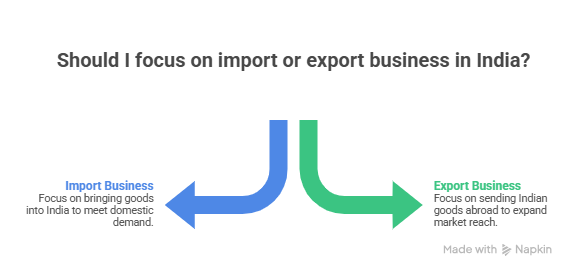
An import export business is a commercial activity where goods, services, or commodities are traded across international borders. The two core operations are:
- Import Business in India: Bringing goods into India from foreign countries. This includes raw materials, electronics, machinery, textiles, chemicals, and consumer goods.
- Export Business from India: Sending Indian goods and products to markets abroad. India exports pharmaceuticals, engineering goods, gems, jewelry, IT services, spices, and much more.
Both sides of the trade equation require market knowledge, regulatory compliance, and strong business networks.
The Scale of India’s Trade Economy
India is currently one of the top 10 trading nations globally. According to the Ministry of Commerce and Industry:
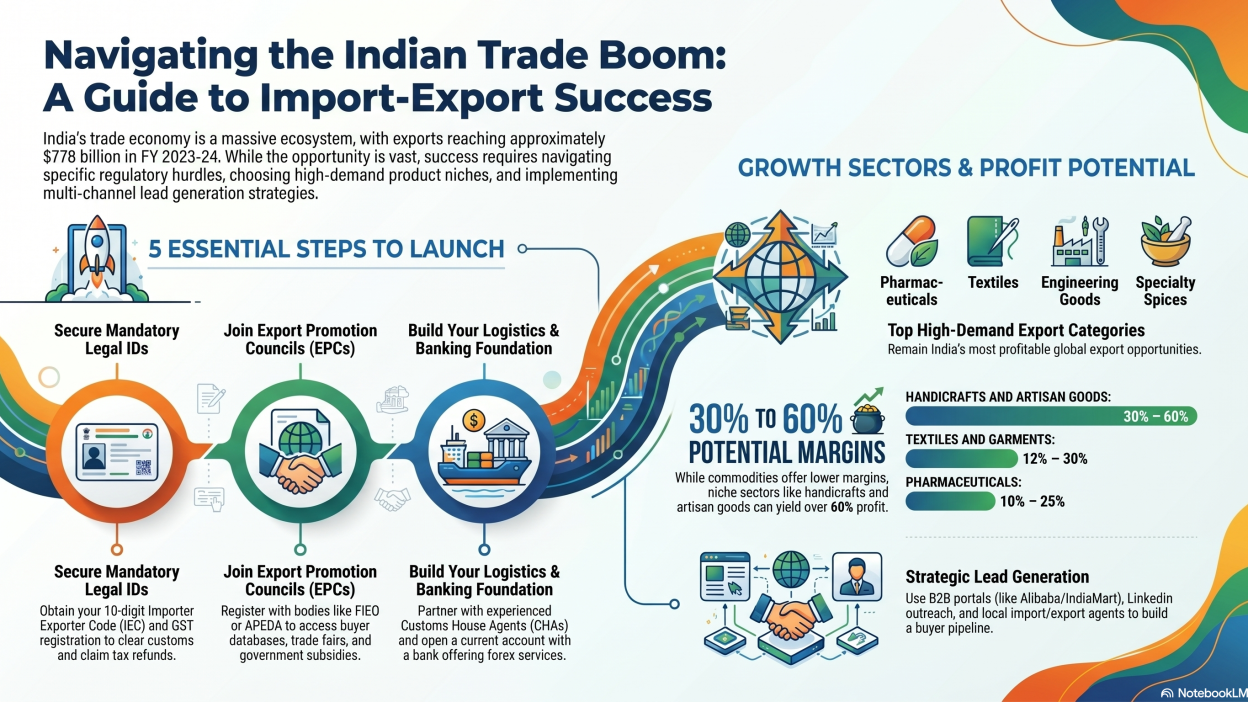
- India’s total exports in FY 2023-24 stood at approximately $778 billion (goods + services combined).
- India imports over $700 billion in goods annually.
- Key trading partners include the USA, UAE, China, Bangladesh, and European Union nations.
This scale means the import export business in India sector is not a niche. It is a massive ecosystem with thousands of sub-sectors, product categories, and profit opportunities waiting to be tapped.
Types of Import Export Businesses in India
The import export business in India is not monolithic. There are several models to choose from:
- Trading Companies: Buy goods from manufacturers and sell internationally or source internationally and sell domestically.
- Export Management Companies (EMCs): Act as the export department for manufacturers who don’t have in-house export expertise.
- Export Trading Companies (ETCs): Specialize in identifying foreign buyers and selling to them on behalf of Indian exporters.
- Drop Shipping Export Models: Partner with Indian manufacturers and facilitate international sales without holding inventory.
- Commission-Based Agents: Work as import/export agents near me or across India, earning a commission per deal.
Understanding which model fits your resources and skills is the very first step toward building a successful import export business in India.
Why India Is the Perfect Place to Build an Import Export Business
India’s economic and geopolitical position makes it one of the best countries in the world to start and scale an import export business. Here’s why:
1. Massive Manufacturing Base
India is a global manufacturing hub for pharmaceuticals, textiles, engineering goods, auto parts, agro-products, and software. This gives exporters a ready pipeline of goods with strong international demand.
2. Favorable Government Policies
The Indian government actively promotes trade through schemes like:
- MEIS (Merchandise Exports from India Scheme)
- RoDTEP (Remission of Duties and Taxes on Exported Products)
- PLI Schemes (Production Linked Incentives)
- Export Credit Guarantee Corporation (ECGC) support
These policies reduce risks and increase import export business profit for registered traders.
3. Growing Free Trade Agreements (FTAs)
India has signed FTAs with countries like UAE, Australia, and is actively negotiating with the EU and UK. This reduces import/export duties and makes the import export leads india even more profitable.
4. Skilled Workforce and Cost Advantages
Lower labor costs compared to Western nations allow Indian exporters to price competitively while maintaining healthy margins. For businesses focusing on the import business in India, sourcing from cost-efficient countries like China, Vietnam, and Bangladesh also creates profitable arbitrage.
5. Digital Infrastructure Growth
India’s digital revolution — including UPI, GST digitization, and online logistics platforms — has made managing an import export business in India easier than ever before.
Best Import Export Business Ideas in India
One of the most common questions asked by new traders is: “Which are the best import export business in India opportunities right now?” Here is a curated list of high-demand, high-profit categories.
Top Export Business Ideas from India
1. Pharmaceutical Exports
India is the world’s largest supplier of generic medicines. The global demand for affordable medicines creates enormous opportunities for pharmaceutical exporters.
2. Textile and Garment Exports
India’s textile industry is one of the oldest and most internationally recognized. Cotton fabrics, silk sarees, readymade garments, and ethnic wear have strong markets in the USA, UK, and Middle East.
3. Engineering Goods and Auto Components
India exports auto parts, industrial machinery, and engineering components to over 200 countries. Margins in this segment can be very attractive.
4. Spices and Agro-Products
Indian spices like cardamom, turmeric, black pepper, and cumin are in global demand. Organic agro-products also present a growing export opportunity.
5. Gems and Jewelry
India is the world’s largest cutting and polishing center for diamonds. Exporting finished gems and jewelry remains one of the highest-revenue export sectors.
6. IT and Software Services
While not physical goods, IT exports are India’s biggest foreign exchange earner — and a growing area for freelancers and small companies to tap into.
Top Import Business Ideas in India
1. Electronics and Gadgets
Importing consumer electronics, semiconductors, and smart devices from China, Taiwan, and South Korea remains highly profitable for the import business in India.
2. Machinery and Industrial Equipment
Small and medium factories constantly need affordable, reliable machinery. Importing from Germany, China, and Japan serves this market well.
3. Chemical Imports
Specialty chemicals, raw materials for pharma, and industrial chemicals are in consistent demand from Indian manufacturers.
4. Luxury Goods
With India’s growing middle class and ultra-high-net-worth population, importing luxury goods — watches, perfumes, fashion accessories — is a fast-expanding segment.
Each of these import export business ideas can be pursued as a standalone venture or combined for a diversified trading portfolio.
How to Start an Import Export Business in India (Step-by-Step Guide)
Starting an import export business in India requires navigating several regulatory and logistical steps. Here is the complete how-to guide every new trader needs.
Step 1: Choose Your Business Structure
Decide whether you will operate as:
- Sole Proprietorship
- Partnership Firm
- Limited Liability Partnership (LLP)
- Private Limited Company
For most import export business ventures, a Private Limited Company or LLP is recommended because it builds credibility with international buyers and Indian banks.
Step 2: Register Your Business
Register your chosen business structure with the Ministry of Corporate Affairs (MCA). This involves:
- Filing incorporation documents online
- Obtaining a Certificate of Incorporation
- Getting a Permanent Account Number (PAN) and Tax Deduction Account Number (TAN)
Step 3: Open a Current Bank Account
Open a dedicated current bank account in your business name. For an import export business in India, choose banks with strong trade finance departments like SBI, HDFC, ICICI, or Axis Bank, as you’ll need forex services and Letters of Credit (LC) support.
Step 4: Obtain an IEC (Importer Exporter Code)
The IEC (Importer Exporter Code) is mandatory for every import export business in India. Without it, you cannot clear goods through customs.
How to get IEC:
- Visit the DGFT (Directorate General of Foreign Trade) portal: dgft.gov.in
- Apply online under “Services > IEC”
- Submit your PAN, bank account details, and identity proof
- Pay a fee of ₹500
- Receive your 10-digit IEC within 2-3 working days
Step 5: Register Under GST
Every import export business must be GST-registered. GST registration allows you to claim refunds on Input Tax Credit (ITC) for export transactions, significantly improving your import export business profit.
Step 6: Register with Export Promotion Councils (EPCs)
Depending on your product category, register with relevant EPCs:
- FIEO (Federation of Indian Export Organizations) — General
- APEDA — Agricultural products
- GJEPC — Gems and jewelry
- Pharmexcil — Pharmaceuticals
- EPCH — Handicrafts
EPC membership gives you access to trade fairs, buyer databases, and government subsidies — all critical for generating leads for your import export business in India.
Step 7: Understand HS Codes and Customs Procedures
Every product in international trade has an HS Code (Harmonized System Code). Knowing your product’s HS code helps you:
- Calculate applicable import/export duties
- Understand restrictions and documentation requirements
- Communicate precisely with customs agents and logistics partners
Step 8: Build Your Logistics Network
Partner with experienced Customs House Agents (CHAs) and freight forwarders. Efficient logistics are the backbone of any profitable import export business in India. Key logistics decisions include:
- Air freight vs. sea freight vs. land transport
- FCL (Full Container Load) vs. LCL (Less than Container Load)
- Insurance and cargo tracking
Step 9: Create Your Import Export Business Plan
A strong import export business plan is non-negotiable. Your plan should include:
- Market research and target countries
- Product selection and pricing strategy
- Supplier/buyer sourcing plan
- Financial projections and break-even analysis
- Marketing and lead generation strategy
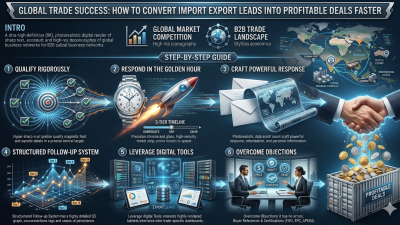
Step 10: Start Generating Leads
Leads are the lifeblood of any import export business in India. Generating quality leads requires a multi-channel approach — which we cover in detail in the next section.
How to Create a Winning Import Export Business Plan
A well-structured import export business plan is what separates businesses that thrive from those that fail. Here is what your plan must include:
1. Executive Summary
A brief overview of your business, the products you trade, target markets, and your competitive advantage.
2. Market Analysis
- Total addressable market size
- Key competitors in your product niche
- Trends driving demand in target markets
- Import/export duty structures affecting profitability
3. Product and Sourcing Strategy
Define exactly what you are exporting or importing, where you will source it, quality control processes, and how you will differentiate.
4. Sales and Lead Generation Plan
Your import export business plan must define exactly how you will find buyers and suppliers. This includes:
- B2B portals (Vyaaparone, IndiaMart, Alibaba, TradeIndia, Global Sources)
- Trade shows and expos participation
- Cold outreach via LinkedIn and email
- Working with import/export agents near me for local deal sourcing
5. Financial Plan
Include:
- Start-up capital requirements
- Working capital cycle estimation
- Revenue forecasts for Year 1, 2, and 3
- Break-even analysis
- Expected import export business profit margins by product category
6. Risk Management
International trade carries risks including currency fluctuation, payment defaults, geopolitical disruptions, and quality disputes. Your plan should outline mitigation strategies such as:
- Using Letters of Credit (LC)
- Insuring shipments through ECGC
- Hedging against forex risk through forward contracts
Benefits of Starting an Import Export Business in India
Why choose an import export business in India over other business models? The benefits are compelling and well-documented.
1. Unlimited Market Size
Domestic businesses are limited to one country’s consumer base. An import export business opens access to 195 countries and billions of potential customers. The market never saturates.
2. High Profit Potential
Import export business profit margins vary by sector, but well-managed traders typically achieve:
- 5% to 15% margins on commodity goods
- 20% to 40% margins on niche or branded products
- 40% to 60% margins on handmade, artisan, or specialty exports
With volume, even lower-margin businesses can generate significant absolute profits.
3. Government Incentives
The Indian government offers:
- Duty drawback schemes
- Tax exemptions on export income under certain conditions
- Subsidized credit through ECGC and SIDBI
- Rebates through RoDTEP
These incentives directly boost the import export business profit of registered exporters.
4. Diversification of Revenue Streams
An import export business in India allows you to operate across multiple product lines, multiple geographies, and both import and export sides simultaneously. This diversification protects you during downturns in any single market.
5. Scalability
Unlike brick-and-mortar businesses, an import export business can scale rapidly. Once you have proven your sourcing and sales systems, adding new product lines or new countries is straightforward.
6. Networking and Global Exposure
Running an import export business in India exposes you to international business practices, global contacts, and cross-cultural negotiation skills — all of which compound in value over time.
7. Brand Building Opportunity
Successful exporters can build internationally recognized brands. Indian brands in textiles, food, and jewelry have created strong global identities that command premium pricing.
8. Job Creation
A growing import export business in India creates direct employment in logistics, quality control, documentation, and sales — contributing positively to the economy.
9. Access to Better Raw Materials
The import business in India allows manufacturers and traders to access high-quality raw materials at competitive prices from global sources — improving the quality and competitiveness of their final products.
10. Currency Advantage
Exporting in USD, EUR, or GBP and managing costs in INR creates a natural currency advantage for Indian exporters, especially when the rupee depreciates.
How to Get Import Export Leads in India
Lead generation is the number one pain point for businesses in the import export business in India sector. Here are proven strategies that work.
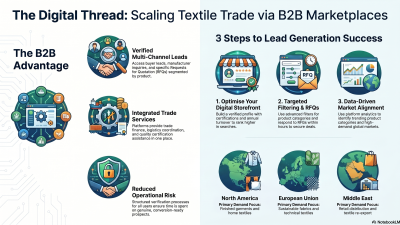
Strategy 1: Register on B2B Trade Portals
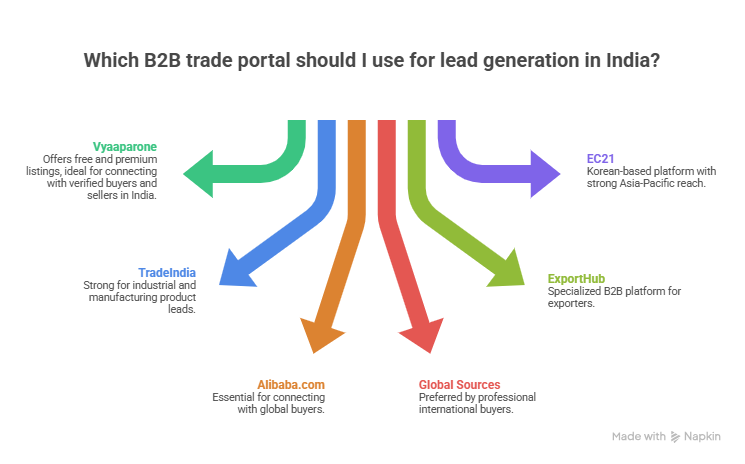
The most direct source of import export business leads are B2B marketplaces. Top platforms include:
- Vyaaparone– A growing B2B platform for India’s import export business. Offers free and premium listings, helping businesses connect with verified buyers and sellers. Ideal for generating high-quality import export leads in India and expanding your trade network efficiently.
- TradeIndia – Strong for industrial and manufacturing product leads.
- Alibaba.com – The world’s largest B2B marketplace. Essential for connecting with global buyers.
- Global Sources – Preferred by professional international buyers.
- ExportHub – Specialized B2B platform for exporters.
- EC21 – Korean-based global B2B platform with strong Asia-Pacific reach.
Optimize your listings with high-quality product photos, competitive pricing, certifications, and detailed descriptions. Verified seller status significantly increases import export business lead quality.
Strategy 2: Participate in Trade Fairs and Expos
Trade fairs remain one of the most powerful lead generation channels for an import export business in India. Key events include:
- India International Trade Fair (IITF), New Delhi
- Vibrant Gujarat Global Trade Show
- Plastivision India
- Excon India – Construction equipment expo
- CPHI India – Pharma industry expo
- Texworld India – Textiles
International fairs like Canton Fair (China), BioFach (Germany), and MAGIC (USA) offer direct access to international buyers.
Strategy 3: Use Digital Marketing
Build a professional website targeting keywords like “import export business in India,” “import export business near me,” and product-specific search terms. Invest in:
- SEO (Search Engine Optimization) for organic traffic
- Google Ads for immediate lead generation
- LinkedIn Marketing for connecting with decision-makers internationally
- Email Marketing for nurturing warm leads into deals
Strategy 4: Partner with Import/Export Agents
Import/export agents near me and across India are often underutilized. These agents already have established relationships with buyers or suppliers in specific markets. A revenue-sharing model with agents can dramatically accelerate your lead pipeline.
To find import/export agents near me:
- Search on FIEO’s agent directory
- Use LinkedIn with location filters
- Contact local Chambers of Commerce
- Attend regional industry events
Strategy 5: Government Trade Databases
The Indian government offers free access to several trade databases:
- DGFT Portal – Export-import trade data
- Commerce Ministry’s Export Data – Country and product-wise data
- Volza.com – Detailed India import export shipment data
These databases help identify who is already importing/exporting your product, giving you warm leads to approach.
Strategy 6: Cold Outreach via LinkedIn and Email
LinkedIn is the world’s most powerful B2B networking tool. Search for purchasing managers, import managers, and supply chain heads in your target countries. Personalized outreach with a clear value proposition generates consistent leads for any import export business in India.
Strategy 7: Word of Mouth and Referrals
Do not underestimate referrals. In the import export business, trust is currency. A satisfied buyer or supplier will consistently refer new business. Build strong relationships — and ask for referrals proactively.
Finding Import Export Business Near Me and Import/Export Agents Near Me
One of the most searched phrases by new traders is “import export business near me” and “import/export agents near me.” Here’s how to find local resources effectively.
Local Industry Associations
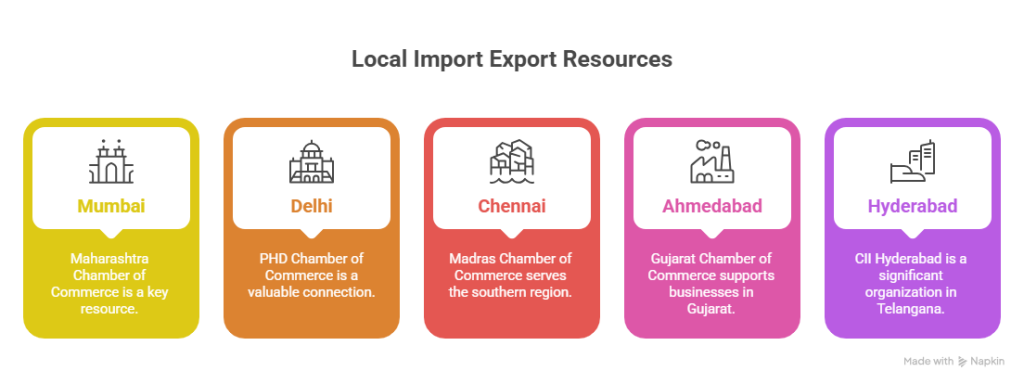
Every major city in India has trade and industry associations connected to the import export business:
- Mumbai: Maharashtra Chamber of Commerce
- Delhi: PHD Chamber of Commerce
- Chennai: Madras Chamber of Commerce
- Ahmedabad: Gujarat Chamber of Commerce
- Hyderabad: CII Hyderabad
FIEO Regional Offices
The Federation of Indian Export Organizations (FIEO) has regional offices across India. Connecting with your nearest FIEO office is the fastest way to find verified import/export agents near me and export promotion resources.
Freight Forwarders and CHAs as Local Connectors
Your local Customs House Agent (CHA) or freight forwarder is deeply embedded in the import export business ecosystem. They regularly work with buyers, suppliers, and agents and can make warm introductions.
Google My Business Searches
A simple Google search for “import export business near me” or “import/export agents near me” combined with your city name will surface local operators. Check their Google reviews and website credibility before approaching.
Import Export Business Profit: What to Realistically Expect
Understanding import export business profit expectations helps you set realistic goals and manage cash flow effectively.
Typical Profit Margins by Sector
| Sector | Typical Margin Range |
| Agricultural Commodities | 3% – 8% |
| Engineering Goods | 8% – 15% |
| Pharmaceuticals | 10% – 25% |
| Textiles and Garments | 12% – 30% |
| Gems and Jewelry | 8% – 20% |
| Specialty Foods and Spices | 15% – 40% |
| Handicrafts and Artisan Goods | 30% – 60% |
Factors That Affect Import Export Business Profit
Positive Factors:
- Government duty drawback and incentives
- Favorable rupee exchange rate
- Strong supplier relationships (better pricing)
- High-volume, repeat business (economies of scale)
- Niche or value-added products (premium pricing)
Negative Factors:
- Currency volatility
- Rising freight costs
- Payment delays or defaults by buyers
- Quality rejections and return shipments
- Regulatory changes and new compliance requirements
Breakeven Timeline
Most new import export business in India ventures break even within 12 to 24 months, depending on startup capital, product margins, and lead conversion efficiency. Businesses that invest in digital marketing and strong agent networks typically break even faster.
Benefits of Working with Import/Export Agents
Import/export agents near me provide services that are invaluable, especially for new businesses:
- Market Knowledge: Agents know which products are in demand in their regions.
- Ready Buyer/Supplier Networks: Agents have existing relationships that take years to build independently.
- Documentation Support: Experienced agents handle the paperwork complexity of international trade.
- Negotiation Expertise: Skilled agents negotiate pricing and terms, protecting your margins.
- Faster Deals: A good agent can close deals in weeks that would otherwise take months.
Working with the right import/export agents near me can transform a struggling import export business in India into a consistently profitable one.
Conclusion: Turn Your Import Export Challenges Into Opportunities
The import export business in India is filled with real, substantial opportunities — but only for those who approach it with the right strategy, the right knowledge, and the right network.
If you have been struggling with finding quality leads, sourcing trusted suppliers, connecting with import/export agents near me, or building a solid import export business plan, the solutions are all within reach. The steps outlined in this guide — from registration and compliance to digital lead generation and agent partnerships — form a proven roadmap to success.
India’s trade environment has never been more favorable. Government support, expanding FTAs, digital infrastructure, and a booming global appetite for Indian goods create a perfect storm of opportunity for every entrepreneur willing to take the leap.
Start with one product. Register your IEC. Build your first B2B listing. Attend one trade fair. Connect with one import/export agent near me. Every global trade empire starts with a single shipment.
Your journey in the import export business in India starts today — and the solution you’ve been struggling to find? It was right here all along.
Frequently Asked Questions
Q1: What is the minimum investment required to start an import export business in India?
You can start a basic import export business in India with as little as ₹1 lakh to ₹5 lakh, covering IEC registration, business registration, basic website, and initial working capital. However, for a scalable operation with inventory, a budget of ₹10 lakh to ₹50 lakh is more realistic.
Q2: Is an import export business in India profitable?
Yes, the import export business in India is highly profitable when done correctly. Profit margins range from 5% for commodities to over 60% for niche handmade or artisan goods. Government incentives like duty drawback and RoDTEP further boost profitability.
Q3: How do I find buyers for my export business?
The most effective methods include listing on B2B portals (Alibaba, IndiaMart), attending trade fairs, partnering with import/export agents near me, digital marketing through Google Ads and LinkedIn, and using DGFT trade databases.
Q4: What documents are required for an import export business in India?
Key documents include:
- IEC (Importer Exporter Code)
- GST Registration Certificate
- PAN Card
- Bank Account Details
- Export/Import licenses (if applicable for restricted goods)
- Shipping Bill or Bill of Entry (for customs clearance)
Q5: What is the best import export business in India for beginners?
The best import export business in India for beginners includes agricultural products (spices, pulses, rice), textiles, and handmade goods — all sectors where India has a strong global reputation, competitive pricing, and wide buyer interest.
Q6: How do I find import/export agents near me?
You can find import/export agents near me through FIEO regional directories, local Chambers of Commerce, freight forwarder referrals, LinkedIn searches, and Google My Business listings.
Q7: How long does it take to get an IEC?
The IEC is typically issued within 2-3 working days after online application on the DGFT portal (dgft.gov.in), provided all documents are correctly submitted.
Q8: What is an import export business plan and why is it important?
An import export business plan is a document outlining your business model, target markets, product sourcing strategy, financial projections, and risk management approach. It is important because it helps secure financing, guides decision-making, and ensures you enter the market with clear objectives.
Q9: How much profit can I make in import export business in India in the first year?
Import export business profit in the first year depends on your sector, startup capital, and efficiency. Most new businesses in the import export business in India generate modest profits or break even in year one, with profitability scaling significantly from year two onwards.
Q10: Can I run an import export business from home in India?
Yes, many successful import export business in India operators start from home, especially trading companies and commission agents. You need a GST-registered address (which can be your home), IEC, and a business bank account.