Introduction
Every supplier needs a steady pipeline of buyers. But finding the right buyers — not just any buyers — is what separates struggling businesses from thriving ones. That is where B2B platforms come in.
Modern B2B lead generation services have completely transformed how suppliers connect with decision-makers. Instead of cold calling hundreds of prospects and hoping for a response, suppliers can now tap into intelligent platforms that identify, qualify, and deliver high-intent buyers directly to their inbox.
In this guide, you will learn exactly how B2B platforms generate leads for suppliers, what makes a lead qualified, and which B2B lead generation techniques deliver the highest ROI. Whether you are new to B2B sales or looking to scale, this breakdown will show you what works — and why.
What Is a Lead in Business? Understanding the Basics
Before diving into techniques, it helps to understand what is a lead in business and why definitions matter.
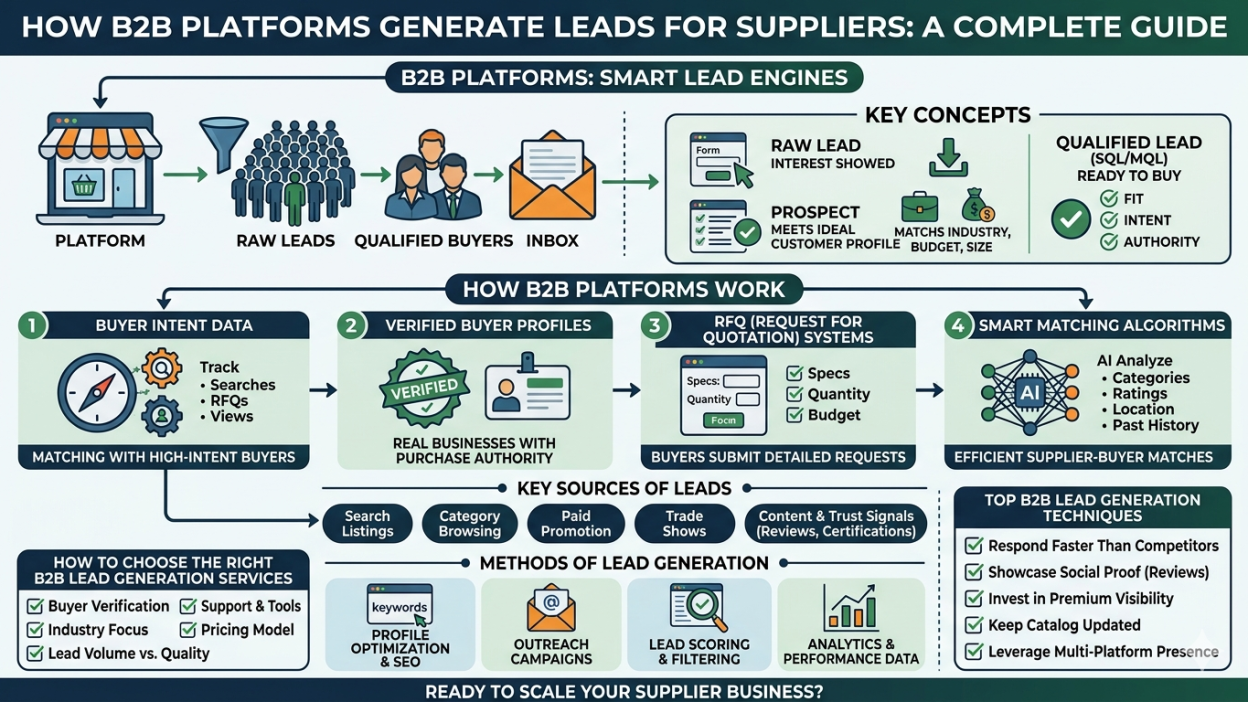
A lead is any individual or company that has shown interest in your product or service. This interest might come from filling out a contact form, downloading a resource, or simply visiting your pricing page. Leads are raw — they have potential, but they have not yet been evaluated for fit or intent.
This is where the prospects vs leads distinction becomes important.
A prospect is a lead that has been reviewed and determined to meet your ideal customer profile. Prospects are more valuable than raw leads because they match your target market in terms of industry, company size, budget, and buying timeline.
Understanding this difference helps suppliers avoid wasting time on leads that will never convert, and focus energy on high-value prospects that are ready to buy.
What Is a Qualified Lead?
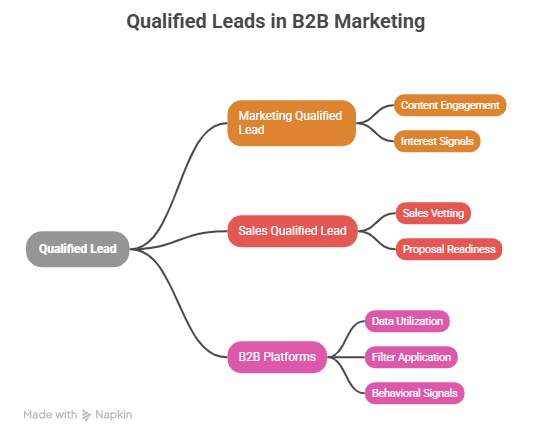
Not every inquiry is worth pursuing. A qualified lead — or what is a qualified lead in B2B terms — is a prospect who meets specific criteria that indicate they are likely to become a customer.
There are two main types:
Marketing Qualified Lead (MQL): A lead that has engaged with your content or marketing campaigns and shows interest, but has not yet spoken to a salesperson.
Sales Qualified Lead (SQL): A prospect that the sales team has vetted and confirmed is ready for a direct conversation or proposal.
B2B platforms play a critical role in delivering SQLs by using data, filters, and behavioral signals to screen out low-quality inquiries before they ever reach your sales team. This dramatically improves conversion rates and shortens the sales cycle.
How B2B Platforms Work as Lead Generation Engines
B2B platforms — also called B2B marketplaces or sourcing platforms — function as centralized hubs where buyers search for suppliers and suppliers compete for visibility. But their value goes far beyond simple listings.
Here is how these platforms generate B2B sales leads at scale:
Buyer Intent Data
Modern B2B platforms track buyer behavior in real time. When a buyer searches for a product category, requests a quote, or shortlists suppliers, the platform captures this intent data. Suppliers are then matched and notified, giving them the opportunity to respond while purchase intent is at its peak.
This is one of the most powerful B2B lead generation techniques available today — because you are reaching buyers at the exact moment they are looking for what you offer.
Verified Buyer Profiles
Unlike social media or generic directories, reputable B2B platforms verify buyer profiles. This means suppliers receive inquiries from real businesses with confirmed purchase authority — not bots, not tire-kickers. Verified buyer data is the foundation of quality B2B lead generation services.
RFQ (Request for Quotation) Systems
One of the most effective sources of leads on B2B platforms is the RFQ system. Buyers submit detailed requests describing exactly what they need — quantity, specifications, delivery timelines, and budget range. Suppliers then respond with tailored quotes.
This system is powerful because:
- The buyer is already deep in the decision-making process
- Inquiry details help suppliers pre-qualify before investing sales resources
- Competition is transparent, allowing for strategic pricing
Smart Matching Algorithms
Advanced B2B platforms use AI-powered algorithms to match buyers with the most relevant suppliers. These algorithms analyze product categories, supplier ratings, location, certifications, and past transaction history to surface the best matches.
For suppliers, this means your products appear in front of buyers who are most likely to purchase — maximizing the efficiency of your lead generation methodology.
Key Sources of Leads on B2B Platforms
Understanding the sources of leads helps suppliers know where to focus their optimization efforts. On B2B platforms, leads typically come from:
Search Listings: Buyers actively searching for products using keywords. Suppliers who optimize their product titles and descriptions rank higher and receive more inquiries.
Category Browsing: Buyers exploring product categories and shortlisting suppliers. A complete, professional profile with images and certifications attracts more attention here.
Paid Promotion: Many platforms offer premium placement options that push supplier profiles to the top of search results, increasing visibility and lead volume significantly.
Trade Shows and Events: Several B2B platforms host virtual or hybrid trade events where suppliers can showcase products to a concentrated audience of active buyers.
Content and Trust Signals: Verified credentials, customer reviews, response rate scores, and certifications all influence buyer decisions. Platforms reward high-performing suppliers with greater organic visibility.
Methods of Lead Generation Used by B2B Platforms
Different platforms use different methods of lead generation, but the most effective ones combine multiple approaches simultaneously.
Profile Optimization and SEO
Your supplier profile is your digital storefront. Platforms with strong internal search engines reward suppliers who use keyword-rich product descriptions, accurate categorization, and high-quality images. This is organic lead generation — buyers find you without any additional spend.
Outreach and Buyer Matching Campaigns
Some B2B platforms proactively match suppliers with relevant buyers through email campaigns, push notifications, or curated buyer lists. These campaigns place your offerings directly in front of verified buyers, shortening the time to first contact.
Lead Scoring and Filtering
Top-tier b2b lead generation companies embed lead scoring into their platforms. Leads are ranked based on engagement signals, company size, purchase history, and query specificity. Suppliers receive pre-scored leads, allowing them to prioritize the most promising inquiries first.
Analytics and Performance Data
Data-driven platforms give suppliers access to dashboards showing how many buyers viewed their profile, what search terms brought them there, and where drop-offs occurred. This insight allows suppliers to continuously refine their lead generation methodology and improve conversion.
B2B Lead Generation Techniques That Drive the Best Results
If you want to maximize your ROI from B2B platforms, these B2B lead generation techniques consistently outperform others:
1. Respond Faster Than Competitors Speed is a critical factor in B2B sales. Buyers often send RFQs to multiple suppliers. The first to respond with a clear, professional quote has a significant advantage. Platforms often display response time metrics — keeping yours low builds trust instantly.
2. Showcase Social Proof Reviews, ratings, and case studies from existing customers are among the most persuasive tools on any B2B platform. Actively ask satisfied clients to leave reviews and display testimonials prominently on your profile.
3. Invest in Premium Visibility Paid placement on B2B platforms is not just advertising — it is targeted lead acquisition. Premium listings appear at the top of buyer searches, often generating 3–5x more inquiries than organic listings alone.
4. Keep Your Catalog Updated Outdated listings with missing information repel buyers. Ensure every product has accurate specifications, minimum order quantities, lead times, and pricing guidance. Buyers are more likely to inquire when they have the information they need upfront.
5. Leverage Multi-Platform Presence Do not rely on a single platform. Distributing your presence across multiple B2B platforms expands your reach and diversifies your lead sources, reducing dependency on any one channel.
Prospects vs Leads: Why the Distinction Matters for Suppliers
Many suppliers make the mistake of treating all inquiries equally. But not every person who contacts you is ready — or right — for your business.
When you understand prospects vs leads, you can build a smarter follow-up process:
- Raw leads need nurturing: send product brochures, case studies, and educational content to move them toward a decision.
- Prospects need selling: engage them with tailored proposals, samples, or demos.
- Qualified leads need closing: move quickly, address objections, and focus on contract terms.
B2B platforms help you enter this process at the prospect or qualified lead stage — dramatically reducing the time and cost of converting a buyer.
How to Choose the Right B2B Lead Generation Services
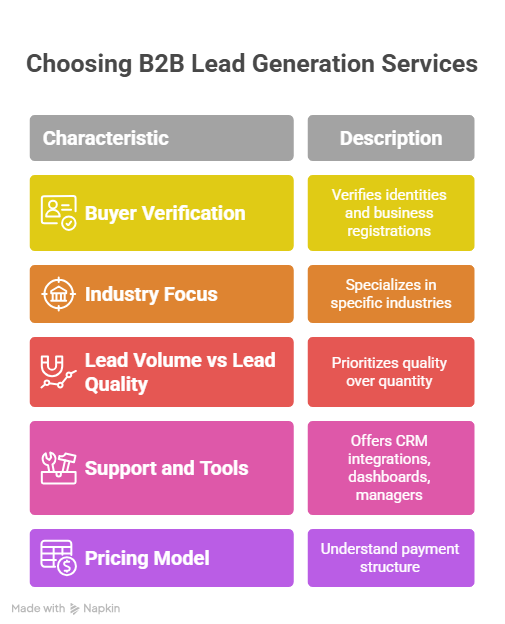
Not all b2b lead generation services are equal. When evaluating platforms, consider:
Buyer Verification: Does the platform verify buyer identities and business registrations? Unverified platforms attract fake inquiries that waste your team’s time.
Industry Focus: Some platforms specialize in specific industries (manufacturing, chemicals, electronics). A niche platform often delivers higher-quality leads than a general marketplace.
Lead Volume vs Lead Quality: High lead volume sounds appealing, but quality matters more. A platform delivering 10 verified, intent-rich leads is far more valuable than one sending 200 cold, unqualified inquiries.
Support and Tools: Look for platforms that offer CRM integrations, performance dashboards, and dedicated account managers who help you get the most from your presence.
Pricing Model: Understand whether you pay per lead, per listing, or via subscription. Per-lead models align platform incentives with your success —platforms earn more when you receive more qualified inquiries.
The Future of B2B Lead Generation
The landscape of B2B lead generation is evolving rapidly. Artificial intelligence, predictive analytics, and personalization are reshaping how platforms connect suppliers with buyers.
AI-powered recommendation engines now predict which buyers are most likely to convert based on historical patterns. Predictive lead scoring helps sales teams prioritize before making first contact. Personalized outreach — powered by platform data — replaces generic cold emails with hyper-relevant messages that resonate.
For suppliers, this means the gap between traditional and platform-driven lead generation will only widen. Businesses that invest in B2B platforms today will build compounding advantages: better data, stronger reviews, higher rankings, and a self-reinforcing cycle of qualified buyer inquiries.
Conclusion
B2B platforms have fundamentally changed how suppliers find and win buyers. By combining verified buyer data, smart matching algorithms, RFQ systems, and advanced B2B lead generation techniques, these platforms deliver a consistent stream of qualified leads — the kind that actually convert.
Understanding what is a lead in business, how prospects vs leads differ, and which sources of leads and methods of lead generation work best puts suppliers in control of their growth. The right B2B platform does not just list your products — it becomes your most powerful sales channel.
Ready to scale your supplier business? Explore the right b2b lead generation services today and start connecting with buyers who are actively searching for what you offer.
Frequently Asked Questions
What is a qualified lead in B2B sales?
A qualified lead in B2B sales is a prospect who meets your ideal customer criteria — including industry, company size, budget, and purchase timeline — and has shown clear intent to buy. B2B platforms help deliver qualified leads by filtering inquiries based on buyer data and behavior.
What is the difference between prospects vs leads?
A lead is anyone who has shown initial interest in your product or service. A prospect is a lead that has been evaluated and confirmed to match your target customer profile. B2B platforms accelerate this process by pre-qualifying buyers before connecting them with suppliers.
What are the most effective B2B lead generation techniques?
The most effective techniques include leveraging buyer intent data, optimizing your supplier profile for platform search, using RFQ systems, investing in premium placement, and maintaining fast response times. Combining these methods delivers the highest-quality B2B sales leads.
What are the main sources of leads on B2B platforms?
Key sources include organic search listings, category browsing, paid promotional placement, virtual trade events, and buyer matching campaigns. Each source varies in lead quality and volume depending on your industry and platform.
How do B2B lead generation companies differ from B2B platforms?
B2B lead generation companies specialize in identifying and delivering leads through outreach, data services, and campaigns. B2B platforms are marketplaces where buyers actively search for suppliers. Platforms often deliver higher-intent leads because buyers initiate contact themselves.