B2B platforms are playing a central role in modern supply chains, especially when it comes to B2B lead generation for suppliers. These ecosystems connect buyers actively searching for products with suppliers trying to grow their customer base, all while automating much of the discovery and communication work. For manufacturers, distributors, and service providers online, understanding how B2B platforms generate leads is key to using them effectively.
At the same time, not every lead is equal. A strong B2B lead generation strategy focuses on attracting high‑intent buyers—those who are ready to evaluate solutions, request quotes, and move toward purchase. This is where B2B marketplaces, RFQ platforms, and supplier networks come in. They help suppliers get in front of decision‑makers, but only if the platform is used strategically and the supplier’s profile is optimized.
In this post, you’ll learn how B2B platforms convert buyer searches into supplier leads, what B2B lead generation strategies work best, and how to leverage tools like product listing optimization to get more qualified inquiries.
How B2B Platforms Generate Leads
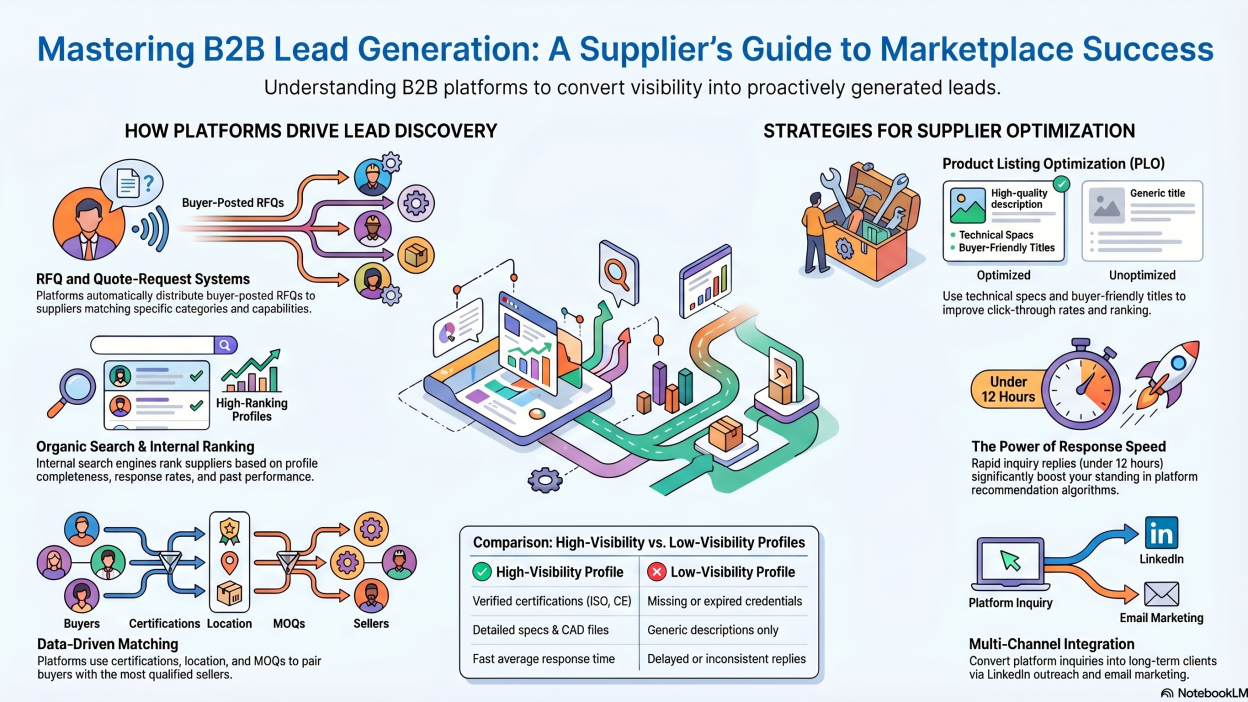
At a high level, how B2B platforms generate leads is a mix of technology, data, and behavior design. Buyers search for products or services, the platform matches them with relevant suppliers, and then routes inquiries or RFQs to the right sellers. Behind this simple flow sit several mechanisms:
- Organic discovery via search and filters
Buyers search for terms like “industrial conveyor belt manufacturer” or “bulk packaging supplier India.” The platform’s internal search engine surfaces matching supplier profiles and product listings. - RFQ and quote‑request systems
Buyers post a request for quotation (RFQ) describing their need. The platform then distributes that RFQ to relevant suppliers based on product category, location, and capability. - Verified buyer networks
Many platforms invest in vetting buyers to ensure they are genuine businesses. This improves lead quality and makes B2B lead generation for suppliers more predictable. - Automated notifications and alerts
Suppliers receive alerts when a new RFQ matches their profile, when a buyer views their listing, or when a product page is bookmarked. This turns passive visibility into active opportunities.
In practice, this means a supplier can gain ongoing, self‑sustaining leads if they maintain accurate information, respond quickly, and keep their product data fresh.
B2B Lead Generation for Suppliers: Core Mechanisms
For suppliers, B2B lead generation for suppliers typically works through three main channels:
1. Buyer‑initiated inquiries
Buyers search, click on a supplier profile, and send a direct inquiry or RFQ. This is the most direct form of B2B lead generation for suppliers and usually has the highest intent.
2. RFQ‑based matching
Buyers post RFQs, and the platform automatically matches them with suppliers that fit the category, certifications, and location. This is common in manufacturing, industrial goods, and procurement‑focused platforms.
3. Platform‑driven exposure
Some platforms push supplier profiles to buyers through:
- Recommended suppliers
- Related suppliers after a search
- Featured or promoted listings
These mechanisms help less‑active buyers discover suppliers they might not have found on their own.
A mini case study: A small metal‑fabrication supplier in India started using a B2B marketplace with RFQ matching. Within three months, RFQ‑driven leads accounted for 60% of all new inquiries, and the average order size was 25% higher than cold‑web leads.
How B2B Platforms Use Data to Match Buyers and Suppliers
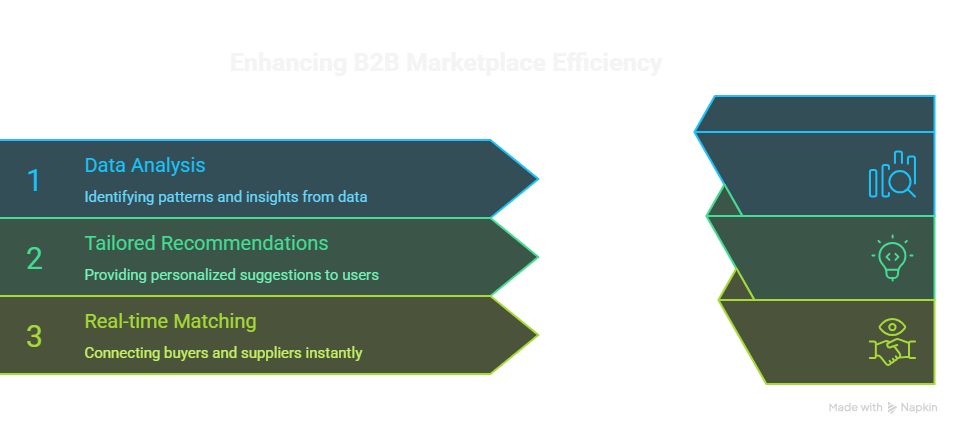
Modern B2B platforms treat how B2B platforms generate leads as a data‑matching problem. The more accurate a supplier’s profile and product data, the better the platform can connect it with the right buyers.
Key data points platforms usually use:
- Product categories and subcategories
- Certifications and standards (ISO, CE, etc.)
- Location and shipping zones
- Minimum order quantity and lead time
- Product attributes and technical specs
When a buyer searches for a product, the platform:
- Parses the search query.
- Matches it to product categories and tags.
- Filters based on location, price, and other criteria.
- Ranks suppliers by completeness of profile, response rate, and past performance.
That ranking is why product listing optimization is so important. A well‑optimized listing improves visibility, increases click‑throughs, and ultimately leads to more qualified B2B lead generation for suppliers.
B2B Lead Generation Strategies That Work
To get the most out of any platform, suppliers need a clear B2B lead generation strategy. Here are widely proven tactics that fit well with B2B platforms:
1. Optimize supplier profiles
- Fill out all sections (company overview, certifications, capabilities).
- Upload high‑quality images and product catalogs.
- Keep contact details and response times visible.
2. Focus on product listing optimization
- Use clear, buyer‑friendly titles (e.g., “Heavy‑Duty Industrial Conveyor Belt 1.2 m Width”).
- Add accurate product descriptions, specs, and use cases.
- Tag products with relevant categories and keywords.
3. Respond quickly to inquiries
Many platforms track response time and factor it into rankings. A fast reply can move a supplier from “possible” to “top” in the eyes of both buyers and the algorithm.
4. Use platform‑specific tools
- Promoted listings or “featured supplier” options.
- Quote‑tracking dashboards.
- Analytics showing how buyers interact with your profile.
5. Combine marketplace leads with owned channels
Use B2B platform leads to build an email list, nurture relationships, and encourage repeat business. For example, after closing a first order, you can invite the buyer to subscribe to a product newsletter or price‑alert list.
These B2B lead generation strategies turn one‑time inquiries into long‑term customer relationships.
The Role of Product Listing Optimization in Lead Generation
Product listing optimization is one of the most underrated drivers of B2B lead generation for suppliers. A poorly written or incomplete listing may rank low, get fewer clicks, and generate weaker leads.
Think of a product listing as a mini‑sales page. It should:
- Address the buyer’s pain points (quality, reliability, lead time).
- Include technical details that matter to procurement teams.
- Use images and PDFs (spec sheets, catalogs) to reduce friction.
Tips for better product listing optimization:
- Use a consistent title structure across similar products.
- Put critical specs in a bullet‑point section for easy scanning.
- Add location‑specific notes (e.g., “Faster delivery in North India”).
- Update stock status and minimum order quantities regularly.
Platforms that allow rich product data (images, videos, CAD files, spec sheets) reward suppliers who fill them out. This reduces the number of back‑and‑forth messages and improves lead quality.
How Buyer Behavior Drives Supplier Leads
Buyer behavior is a big part of how B2B platforms generate leads. Sophisticated platforms track things like:
- How often a buyer visits a supplier’s profile.
- Time spent on product pages.
- How many RFQs a buyer sends per month.
- Which categories they browse most.
This data helps the platform:
- Show the right suppliers to the right buyers.
- Prioritize suppliers with high engagement and fast response times.
- Recommend products or suppliers similar to those the buyer has viewed.
For suppliers, this means behavior also matters. A supplier who:
- Responds quickly
- Delivers consistently
- Keeps product data updated
will naturally benefit from more B2B lead generation for suppliers because the platform’s logic starts to favor them.
Simple Steps to Improve B2B Lead Generation on Platforms
If you already use a B2B platform, here are actionable steps to strengthen your B2B lead generation for suppliers:
1. Audit your current listings
- Look at which products get the most views.
- Check which ones get quotes but don’t convert.
- Identify gaps in images, specs, or description clarity.
2. Standardize your content
Create templates for:
- Product titles
- Descriptions
- Key specs bullets
This makes it easier to maintain high‑quality product listing optimization at scale.
3. Set up a response workflow
- Assign a person or team to manage platform inquiries.
- Agree on a maximum response time (e.g., 6–12 hours).
- Prepare standard responses for common questions.
4. Track performance
Use platform analytics (if available) to monitor:
- Views per listing
- Inquiry‑to‑quote ratios
- Deal‑closure rates from platform leads
These metrics help refine your B2B lead generation strategies over time.
Why Some Suppliers Get More Leads
Not all suppliers on the same platform get equal B2B lead generation for suppliers. The main reasons are:
- Profile completeness – Suppliers with full profiles, certifications, and clear descriptions rank higher.
- Response speed – Fast responders are often prioritized in recommendations.
- Data quality – Accurate product information reduces friction and improves conversion.
- Activity level – Platforms often reward active suppliers who regularly update data and respond to messages.
In effect, the platform acts like a visibility engine: it rewards suppliers who invest in optimization and communication.
How to Combine Platform Leads With Other Channels
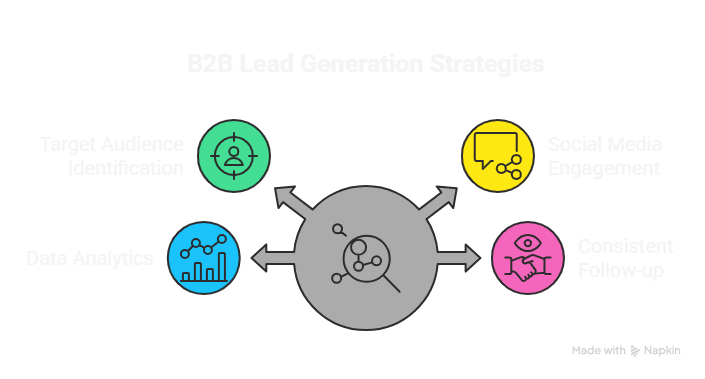
A strong B2B lead generation strategy does not stop at the platform. Smart suppliers combine marketplace leads with:
- Email marketing
- LinkedIn outreach
- Website remarketing
- Catalogs and brochures
For example, after closing a first order from a platform lead, a supplier can:
- Add the buyer to an email list.
- Share periodic updates (new products, price changes, capacity updates).
- Follow up with a LinkedIn connection or call to explore more opportunities.
This approach turns one‑off RFQs into repeat business and long‑term relationships, which is a core goal of B2B lead generation for suppliers.
Measuring the Impact of B2B Lead Generation Efforts
To know whether your B2B lead generation strategies are working, track a few key metrics:
- Number of daily/monthly RFQs or inquiries.
- Average response time.
- Quote‑to‑deal conversion rate.
- Average order value from platform leads.
- Cost per lead (if using paid promotions).
If you see:
- Rising inquiries
- Stable or improving conversion
- Higher average order value
then your mix of product listing optimization and platform‑specific tactics is likely working well.
Final Words
Understanding how B2B platforms generate leads is essential for any supplier trying to grow in today’s digital‑first environment. When combined with strong B2B lead generation for suppliers tactics and thoughtful product listing optimization, these platforms can become a reliable source of high‑intent buyers.
A well‑structured B2B lead generation strategy uses platforms as a starting point, then builds relationships across email, LinkedIn, and owned channels. By focusing on data quality, response speed, and continuous optimization, suppliers can turn a basic presence into a steady pipeline of qualified leads and long‑term customers.
FAQ
1. What is B2B lead generation for suppliers?
B2B lead generation for suppliers refers to the process of attracting qualified business buyers who may need a supplier’s products or services and then converting them into sales opportunities.
2. How do B2B platforms generate leads?
B2B platforms generate leads by connecting buyer searches and RFQs with matching supplier profiles, using filters, data, and behavioral signals to prioritize relevant suppliers.
3. What are effective B2B lead generation strategies?
Key strategies include optimizing supplier and product listings, responding quickly to inquiries, using platform‑specific tools, and nurturing leads across email and other channels.
4. Why is product listing optimization important?
Product listing optimization improves visibility, click‑throughs, and lead quality by making product information clear, accurate, and easy to scan for buyers.
5. How can a supplier get more RFQs from B2B platforms?
A supplier can get more RFQs by keeping profiles complete, product data up to date, response times short, and using promoted listings or featured‑supplier options where available.
6. How do buyer‑search behaviors affect supplier leads?
Platforms track buyer behavior (views, RFQs, time on page) and use it to recommend suppliers, so consistent, high‑intent behavior increases the chances of seeing qualified leads.
7. Should suppliers rely only on B2B platforms for leads?
No; a strong B2B lead generation strategy combines platform leads with owned channels like email, LinkedIn, and website remarketing to build long‑term relationships.