
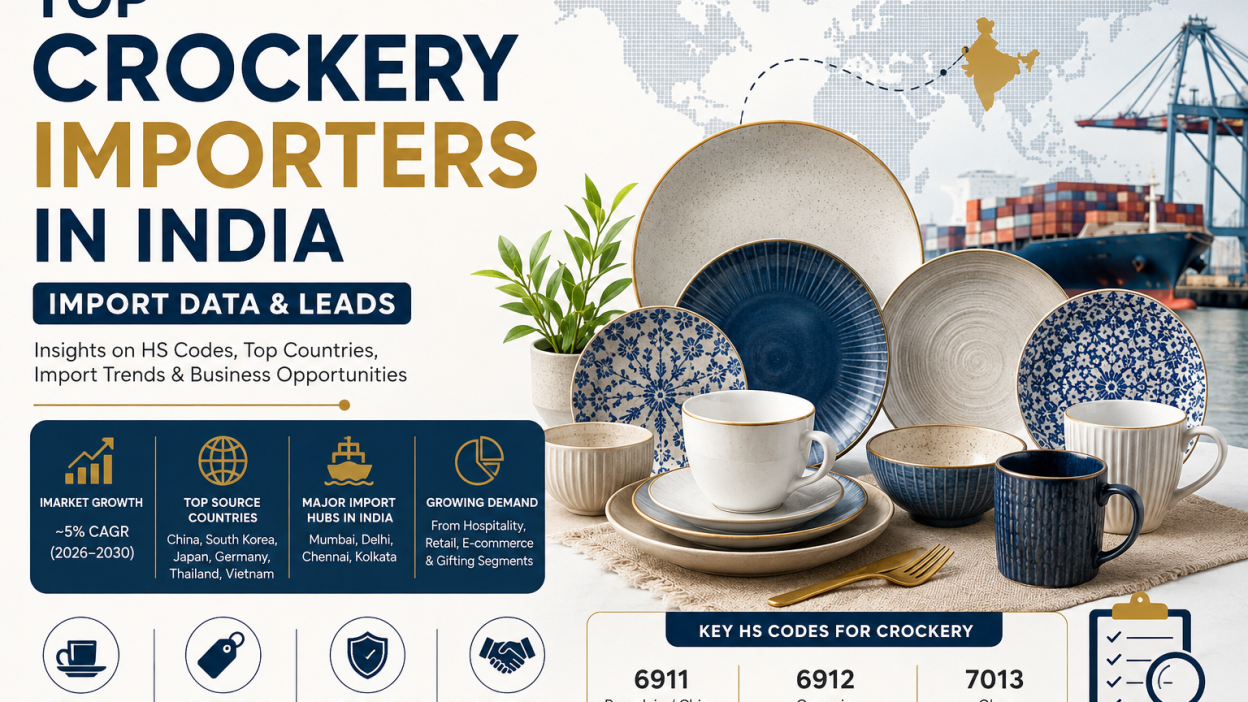
Walk into any mid-tier café in Delhi or a kitchenware store in Mumbai, and you will instantly notice that most of the crockery on the shelves was not made in India. That is not a coincidence — it is a market signal. Crockery importers in India are actively sourcing premium tableware from global manufacturers to meet a demand that domestic production simply cannot keep up with.
Whether you are a wholesale distributor, a hospitality chain, or a new entrant looking for verified crockery import leads, this guide gives you the full picture — from market size and HS codes to import data trends and the best business opportunities in 2026.
Indian Crockery Import Market Overview
The Indian Crockery market has experienced rapid growth due to an increase in disposable income, urbanization, and changes in consumer lifestyles. These changes have prompted an increased demand for high-quality dining wares and kitchen wares. These changes have promoted an increased demand for dining wares and kitchen wares of a high quality.
Growth of the middle class with increased purchasing power
Increase of home décor and dining experience
Expansion of dining and hospitality businesses
Growth of online commerce
Demand for unique tablewareCurrently, crockery importers in India, cater to a wide array of clientele, from hospitality, design, and giftware businesses, to online sellers.
Why Crockery Imports in India Are Growing Fast
India does have a domestic crockery manufacturing base, but it has not been able to fully meet demand for premium, designed, or specialty tableware. Hospitality chains, retail brands, and even individual households are increasingly drawn to imported options because of the variety, finish quality, and competitive price points offered by foreign manufacturers.
The numbers back this up:
- India imported approximately $900–950 million worth of ceramic products in 2024
- The tableware market is projected to grow at a ~5% CAGR from 2026 to 2030
- Import volumes have shown sustained growth, especially in the porcelain and stoneware segments
Several structural factors are fueling this growth in the crockery market in India:
- Rising disposable incomes and an expanding middle class
- Rapid growth of retail chains and e-commerce platforms
- Booming hospitality and food service industry
- Growing consumer preference for aesthetically designed and branded tableware
For anyone tracking the crockery import data space, these are not temporary trends — they reflect a fundamental shift in how Indian consumers and businesses think about tableware.
Crockery HS Code: What Importers Need to Know
Before you can access accurate crockery import data or calculate your landed costs, you need to understand how crockery is classified in international trade. The crockery HS code framework determines duty rates, regulatory compliance, and the accuracy of your shipment documentation.
Here is a clear breakdown of the primary HS codes used for crockery imports in India:
| HS Code | Material | Description |
| 6911 | Porcelain / China | Premium crockery — used for fine dining and hospitality |
| 6911 1000 | Porcelain | Tableware and kitchenware made of porcelain |
| 6912 | Ceramic (non-porcelain) | Everyday ceramic crockery |
| 6912 0010 | Earthenware | Basic ceramic household items |
| 6912 0090 | Other ceramics | Stoneware, mixed ceramic products |
| 7013 | Glass | Glass tableware and drinkware |
| 7013 3700 | Glass | Drinking glasses and glass serveware |
Getting the correct crockery HS code right matters for two reasons: first, it directly determines the import duty you pay; second, it is the foundation for pulling reliable crockery import data from trade intelligence platforms. An incorrect HS code can delay your shipment, inflate your costs, or make your market research unreliable.
Indian Crockery Import Market Overview
The Indian Crockery market has experienced rapid growth due to an increase in disposable income, urbanization, and changes in consumer lifestyles. These changes have prompted an increased demand for high-quality dining wares and kitchen wares. These changes have promoted an increased demand for dining wares and kitchen wares of a high quality.
Growth of the middle class with increased purchasing power
Increase of home décor and dining experience
Expansion of dining and hospitality businesses
Growth of online commerce
Demand for unique tableware
Currently, crockery importers in India, cater to a wide array of clientele, from hospitality, design, and giftware businesses, to online sellers.
Top Source Countries for Crockery Imports in India
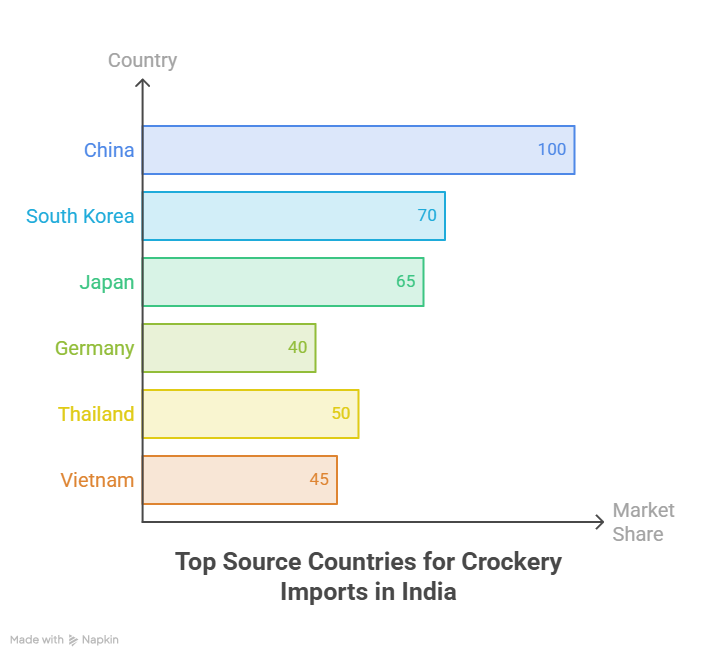
India’s crockery import data consistently shows that a handful of countries dominate the supply side. Each country occupies a distinct segment of the market.
China is by far the largest supplier. It offers the widest variety of crockery at highly competitive prices — from basic ceramic plates to surprisingly premium-finish products. Most wholesale distributors and e-commerce importers rely on Chinese suppliers for their primary inventory.
South Korea and Japan are preferred for premium ceramic and fine China products. These countries cater to the hospitality segment and luxury retail, where quality and brand story matter as much as price.
Germany represents the European premium tier. Imports from Germany serve niche buyers who prioritize craftsmanship, specific design aesthetics, and brand reputation. Margins are higher, and so are the expectations.
Thailand and Vietnam have emerged as strong mid-range suppliers. They offer acceptable quality at attractive price points, making them popular with mid-sized importers looking for alternatives to Chinese sourcing.
Who Are the Top Crockery Importers in India?
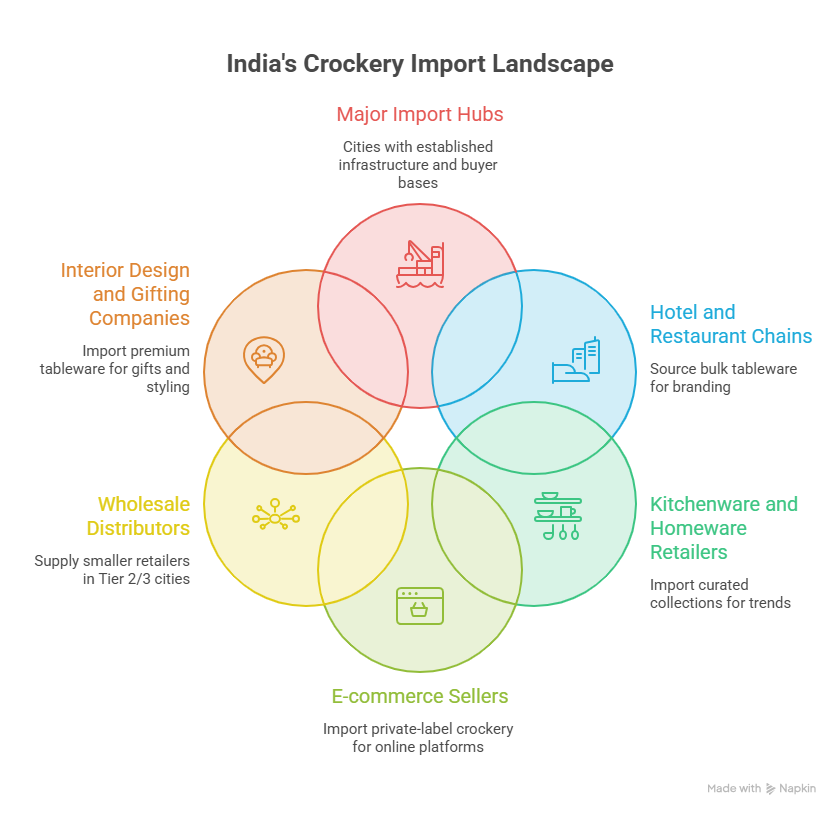
The crockery importers in India are not a monolithic group. They span multiple business types, each with different sourcing volumes, price points, and end-use cases. Here is how the landscape breaks down:
Hotel and Restaurant Chains source tableware in bulk to maintain consistent branding across properties. These buyers prioritize durability, uniformity, and supplier reliability over price alone.
Kitchenware and Homeware Retailers — including specialty stores, Home Centre, and IKEA — import curated collections that align with seasonal design trends and consumer preferences.
E-commerce Sellers import private-label crockery for platforms like Amazon and Flipkart. This segment has grown significantly with the ease of lower minimum order quantities and better logistics options.
Wholesale Distributors supply smaller retailers across Tier 2 and Tier 3 cities such as Udaipur, Mysuru, and Lucknow. They play a critical role in bringing imported products to markets that large retailers do not directly serve.
Interior Design and Gifting Companies import decorative and premium tableware for corporate gifting, wedding packages, and high-end home styling projects.
Major import hubs include Mumbai, Delhi, Chennai, and Kolkata — cities with well-established customs infrastructure, wholesale networks, and proximity to large buyer bases.
What Crockery Import Data Reveals About 2026 Trends
Analyzing crockery import data from trade intelligence platforms gives importers and suppliers a meaningful edge. Here is what the data is showing for 2026:
Porcelain is leading growth. Shipment volumes in the ceramic and porcelain category have seen sustained increases, driven by demand from the hospitality sector and premium homeware retailers.
Average order values are rising. Buyers are moving up the quality curve. The data shows a shift away from the cheapest available options toward mid-premium and premium products with better finish and longevity.
Smaller importers are entering the market. Lower minimum order quantities from Asian suppliers, combined with improved freight logistics, have made it practical for mid-sized businesses to import directly rather than buying through a distributor.
Stoneware and matte-finish products are trending. Consumer aesthetics are shifting. Matte finishes, rustic textures, and artisan-style stoneware are seeing strong demand — especially in urban markets and from food service businesses positioning around a craft or premium experience.
For businesses looking to identify the best crockery import leads in India, these trends point to specific buyer profiles worth targeting: hospitality chains scaling up, e-commerce sellers expanding their product range, and retail chains refreshing their tableware collections.
Key Challenges Facing Crockery Importers in India
Despite the growth opportunity, crockery importers in India face a set of real operational and financial challenges:
- High import duties on ceramic goods compress margins, especially for importers competing on price
- Fragile goods require specialized packaging, increasing per-unit shipping costs
- Quality inconsistencies from low-cost suppliers can result in returns, reputational damage, and unsold inventory
- Port delays caused by documentation errors or customs inspections slow down inventory planning
- Currency fluctuations affect landed costs unpredictably, making financial planning difficult
Understanding these challenges is essential for anyone building a sustainable import business. Reliable crockery import data helps mitigate some of these risks by giving importers better visibility into supplier performance, pricing benchmarks, and competitor sourcing patterns.
Best Crockery Import Leads in India: How to Find and Qualify Them
Finding best crockery import leads in India requires more than just a Google search. The most effective importers use a combination of trade data platforms, industry networks, and market intelligence tools.
Trade data platforms provide shipment-level data — including buyer names, supplier details, port of entry, shipment dates, and declared values. This is the most direct way to identify active importers who are already buying crockery at scale.
Industry trade shows such as Ambiente India, IHGF (India International Home & Lifestyle Fair), and HoReCa expos are where buyers and suppliers meet in person. Attending these events gives you direct access to decision-makers.
B2B marketplaces like IndiaMart and TradeIndia list verified buyers and suppliers, though the quality of leads varies and needs manual qualification.
Direct outreach to hospitality chains, retail buyers, and wholesale distributors — informed by trade data — remains one of the highest-conversion approaches for generating crockery import leads.
The key differentiator between average leads and the best crockery import leads is verification: confirmed shipment history, active buying behavior, and alignment with your product category and price range.
Opportunities in the Crockery Import Market for 2026 and Beyond
Despite the challenges, 2026 looks genuinely promising for players in the crockery market in India. Here are the opportunities worth paying attention to:
- Tier 2 city expansion is opening fresh retail markets where demand for quality imported crockery is growing but supply is still limited
- Hotel and restaurant expansion across India — particularly in leisure travel destinations — is creating consistent, high-volume orders for standardized tableware
- Rising consumer interest in themed, artistic, and handcrafted ceramics is creating margin-rich niches that price-driven competitors cannot easily enter
- Digital trade intelligence tools are making supplier discovery faster and more verifiable, reducing the risk of onboarding unreliable vendors
Final Words
The crockery importers in India ecosystem is maturing. What was once a price-driven market is increasingly being shaped by quality preferences, aesthetic trends, and strategic sourcing. For businesses that stay on top of crockery HS code classifications, use reliable crockery import data to track market shifts, and build verified supplier relationships — the demand in this space is real and growing.
Whether you are already operating as one of the established importers or exploring market entry in 2026, the fundamentals of this market are solid. The crockery market in India rewards those who act on accurate data, not assumptions.
Frequently Asked Questions
Who are the top crockery importers in India?
The most active segments include hotel and restaurant chains, homeware retailers, wholesale distributors, e-commerce private-label sellers, and gifting companies. Mumbai, Delhi, Chennai, and Kolkata are the primary import hubs.
What crockery HS code is used for porcelain tableware?
Porcelain tableware falls under HS Code 6911, with 6911 1000 covering porcelain tableware and kitchenware specifically. Non-porcelain ceramic crockery falls under HS Code 6912.
Which country exports the most crockery to India?
China is the dominant supplier, followed by Japan and South Korea. Thailand and Vietnam are growing mid-range suppliers.
How does crockery import data help businesses?
Import data helps identify active buyers, track shipment volumes, benchmark pricing, monitor competitor sourcing patterns, and discover new supplier markets — all of which support smarter procurement and sales decisions.
Is the crockery import market in India growing in 2026?
Yes. Hospitality sector expansion, retail growth, rising consumer incomes, and increasing preference for premium tableware are all driving consistent growth in crockery imports in India this year.
Where can I find the best crockery import leads in India?
Trade data platforms with verified shipment records, industry trade fairs, B2B directories, and direct outreach informed by import data are the most reliable sources for best crockery import leads in India.