Introduction
The global textile industry is one of the world’s largest and most dynamic trading sectors, generating billions of dollars in annual revenue across continents. Yet for many businesses — whether manufacturers, wholesalers, or distributors — finding reliable textile import export leads remains one of the biggest challenges in scaling their operations.
That’s where a dedicated textile B2B marketplace makes all the difference. Instead of spending months cold-calling potential buyers or searching through unreliable directories, you gain instant access to verified global buyers, sellers, and service providers under one roof. Whether you are looking to expand your export reach or source quality fabrics at competitive prices, the right B2B platform can transform your textile business.
In this guide, we’ll explore how to find the best textile import export leads, what a B2B textile marketplace offers, and why joining a specialized textile trade portal is the smartest move for modern textile businesses.
What Are Textile Import Export Leads?
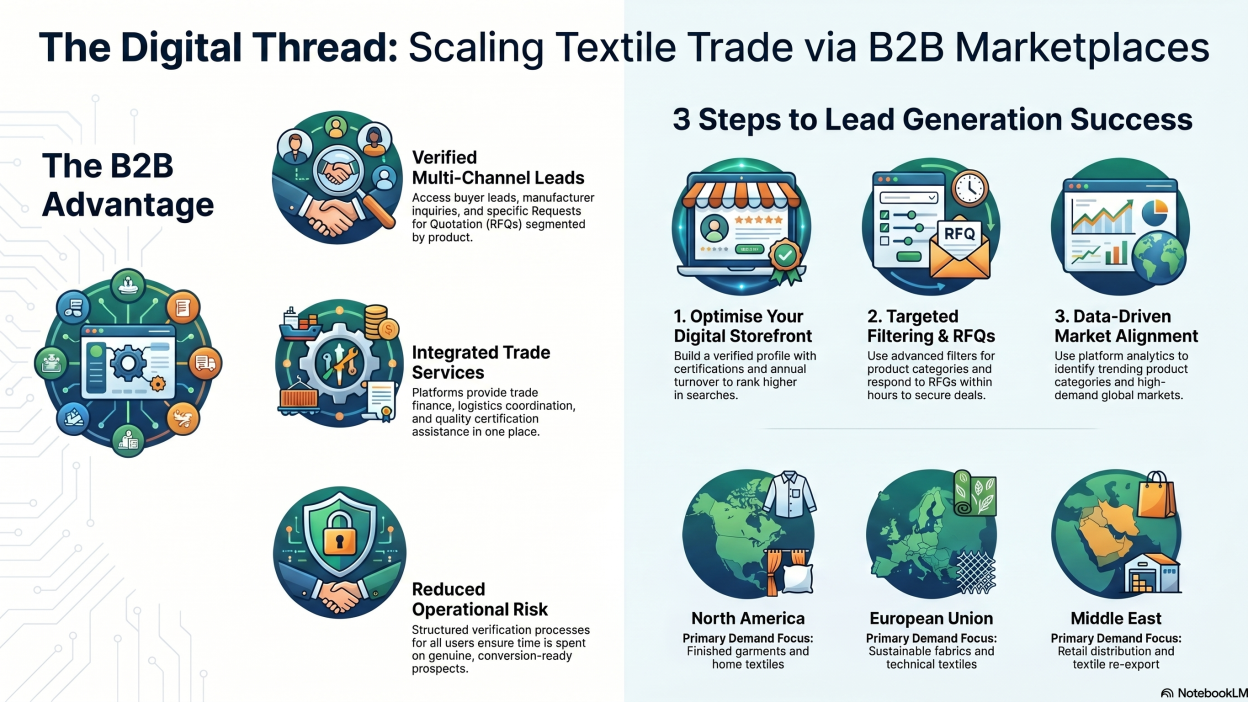
Textile import export leads are verified business inquiries from buyers, importers, exporters, and distributors actively looking to trade textile products. These leads can include:
- Buyer Leads — International buyers looking to source fabrics, garments, yarns, or finished goods
- Seller Leads — Manufacturers and suppliers actively seeking new export markets
- Trade Inquiries — Specific RFQs (Requests for Quotation) from verified businesses
- Distributor Leads — Regional distributors seeking textile brands or manufacturers to partner with
Unlike general trade leads, textile-specific leads are segmented by product category, country, and trade volume. This means your sales team connects with prospects who are genuinely interested in what you offer — saving time, money, and resources.
A good B2B textile portal organizes these leads in real time, ensuring you never miss a high-value trade opportunity in your target market.
Why Your Business Needs a B2B Textile Marketplace
A B2B textile marketplace is more than just a directory. It is a full-service trade ecosystem built specifically for the textile and apparel industry. Here is why thousands of businesses worldwide are making the switch:
1. Access to a Global Network of Verified Buyers and Sellers
Traditional trade fairs and exhibitions are expensive and limited to a specific geography or season. A b2b textile marketplace gives you year-round access to verified importers and exporters from markets including the USA, Europe, the Middle East, Southeast Asia, and beyond.
Every buyer and seller profile on a credible textile trade platform is verified through a structured process. This reduces the risk of fraud and ensures that your time is spent on genuine, conversion-ready leads.
2. Faster Deal Closures with Quality Import Export Leads
Speed is everything in textile trade. A fabric trend can shift within a season, and buyers need suppliers who can deliver quickly. When you have direct access to import export leads categorized by product type and urgency, your response time improves dramatically.
Platforms with real-time RFQ alerts ensure that you are among the first suppliers to respond to a buyer inquiry — giving you a clear competitive advantage over businesses that rely on slower, traditional prospecting methods.
3. Comprehensive Textile Industry Services in One Place
A leading B2B textile portal doesn’t just list buyers and sellers. It also offers a suite of textile industry services that streamline your entire trade process:
- Trade Finance Support — Facilitating letters of credit and payment assurance
- Logistics Coordination — Connecting you with trusted freight forwarders and customs brokers
- Quality Certification Assistance — Helping suppliers meet international compliance standards
- Market Intelligence Reports — Keeping you updated on global textile pricing, demand, and trends
These value-added services mean you can manage your entire import export textile operation from a single, integrated platform.
How to Find High-Quality Textile Import Export Leads
Finding quality leads in the textile industry requires both strategy and the right tools. Here’s a proven approach to maximizing your lead generation on a b2b textile marketplace:
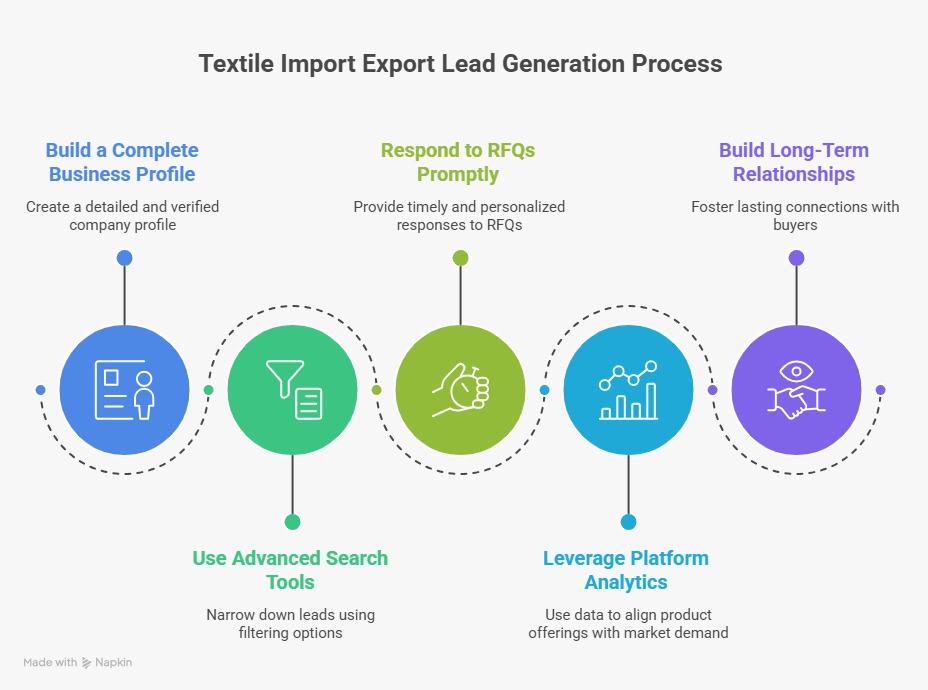
Step 1: Build a Complete and Verified Business Profile
Your company profile is your digital storefront. A complete profile — including product categories, certifications, annual turnover, and export markets — builds trust with potential buyers. Platforms that verify supplier credentials rank these profiles higher in search results, generating more inbound textile import export leads organically.
Step 2: Use Advanced Search and Filter Tools
Top b2b textile portals offer advanced filtering options that allow you to narrow down leads by:
- Product category (fabrics, yarn, garments, home textiles, technical textiles)
- Country of origin or destination
- Order volume and trade frequency
- Buyer or seller verification status
This precision targeting ensures your outreach is focused on high-potential prospects rather than broad, unqualified contacts.
Step 3: Respond to RFQs Promptly and Professionally
When a buyer posts a Request for Quotation on a textile B2B marketplace, timing is critical. Businesses that respond within the first few hours of an RFQ posting are significantly more likely to close the deal. Craft personalized responses that address the buyer’s specific needs, highlight your competitive pricing, and include all relevant product certifications.
Step 4: Leverage Platform Analytics and Trend Data
Modern B2B textile portals provide data analytics tools that show you which product categories are trending, which markets have the highest demand, and which types of buyers are most active. Use this intelligence to align your product offerings and marketing messaging with real-time market demand.
Step 5: Build Long-Term Relationships, Not Just One-Time Deals
The best import export textile businesses are built on relationships. Use the messaging and CRM features on your chosen marketplace to follow up with previous buyers, send product updates, and re-engage leads that didn’t convert initially. A long-term buyer relationship is worth far more than a single transaction.
Key Product Categories on a Textile B2B Marketplace
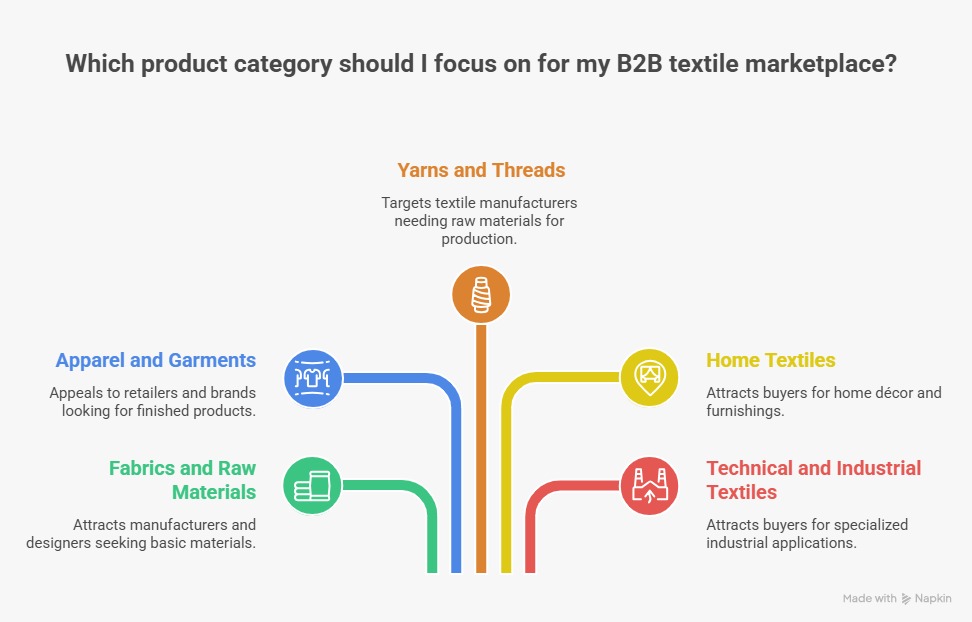
A comprehensive b2b textile marketplace covers every segment of the textile supply chain. Some of the most actively traded product categories include:
Fabrics and Raw Materials
- Cotton, polyester, silk, linen, and blended fabrics
- Technical and performance fabrics for industrial use
- Dyed, printed, and greige fabrics for export
Apparel and Garments
- Ready-made garments (RMG) for men, women, and children
- Sportswear, activewear, and performance clothing
- Fashion and designer apparel for retail distribution
Yarns and Threads
- Spun yarns, filament yarns, and specialty threads
- Dyed and undyed options across all fibers
- Knitting and weaving yarns for manufacturing
Home Textiles
- Bed linen, towels, curtains, and upholstery fabrics
- Table linen, kitchen textiles, and bath accessories
- Custom-designed home décor textiles for export
Technical and Industrial Textiles
- Geotextiles, agrotextiles, and medical textiles
- Automotive and aerospace textile applications
- Protective and safety clothing fabrics
Each category attracts a specific type of buyer, and a well-structured B2B textile portal helps you pinpoint the right segment to maximize your textile import export success.
Top Markets for Textile Import Export Leads
Understanding where the demand comes from is essential for any import export textile business. Here are the key global markets driving trade activity:
United States and Canada
North America remains one of the largest importers of finished garments and home textiles. US buyers on textile B2B marketplaces are constantly searching for reliable suppliers in Asia, the Middle East, and Eastern Europe who can meet strict quality and compliance standards.
European Union
EU countries — particularly Germany, France, Italy, and the Netherlands — are major importers of fashion textiles, sustainable fabrics, and technical textiles. Textile import export leads from European buyers often come with longer-term contracts and higher order values.
Middle East and Gulf Countries
The Gulf region is a growing hub for textile re-export and distribution. Buyers from UAE, Saudi Arabia, and Qatar actively use b2b textile portals to source fabrics and garments for their rapidly expanding retail and fashion markets.
Southeast Asia and China
While China is a major textile exporter, it is also a significant importer of specialty fabrics and raw materials. Southeast Asian countries like Bangladesh, Vietnam, and Cambodia are important manufacturing hubs generating strong demand for yarns and raw fabric imports.
Africa and Emerging Markets
Africa’s textile industry is growing rapidly, driven by increasing local manufacturing and retail demand. Import export leads from African buyers often focus on affordable fabrics, garments, and machinery — making it a high-growth opportunity for exporters.
Textile Industry Services That Add Value to Your Trade
Beyond just listing leads, a quality textile B2B marketplace offers critical textile industry services that help businesses grow:
1. Supplier Verification and Audit Support Get your factory or warehouse audited and certified through the platform, making your profile more attractive to international buyers who prioritize compliance.
2. Sample Management Tools Many platforms offer digital sample tracking, allowing buyers to request, approve, and pay for samples directly — speeding up the procurement cycle significantly.
3. Trade Dispute Resolution In case of payment or quality disputes, established b2b textile portals offer mediation services to protect both buyer and seller interests.
4. Digital Marketing and SEO Promotion Premium platform memberships often include dedicated product page promotion, ensuring your textile import export listings appear at the top of relevant buyer searches.
5. Export Documentation Assistance From certificates of origin to GSP documentation, many textile platforms partner with trade experts to help exporters prepare compliant shipping documentation.
How to Choose the Right B2B Textile Portal
Not all b2b textile portals are created equal. Here is what to look for when selecting the right platform for your business:
- Industry Specialization — Choose a platform dedicated to textiles, not a generic trade directory. Specialized platforms attract more qualified leads.
- Verified Membership — Look for platforms that verify buyer and seller credentials before granting access to contact information.
- Active Lead Volume — Check how many new textile import export leads are posted daily or weekly. A platform with low activity won’t deliver meaningful results.
- Global Reach — Ensure the platform has an active user base across your target markets.
- Support and Tools — Prioritize platforms that offer analytics, CRM features, and dedicated account management.
- Transparent Pricing — Avoid platforms with hidden fees. The best textile B2B marketplaces offer clear membership tiers with defined benefits.
Final thought
The textile trade is evolving fast, and businesses that embrace digital tools will lead the next wave of global growth. A trusted textile B2B marketplace gives you direct access to high-quality textile import export leads, connects you with verified global buyers and suppliers, and supports your business with the textile industry services you need to scale confidently.
Whether you are an established exporter looking to diversify your markets or a growing importer seeking reliable suppliers, now is the time to join the right b2b textile portal and put your business in front of thousands of active trade partners worldwide.
Start exploring import export textile opportunities today — your next big deal is just one connection away.
Frequently Asked Questions
Q1: What types of businesses can benefit from textile import export leads?
Any business involved in the textile supply chain can benefit — including fabric manufacturers, garment exporters, yarn producers, home textile companies, and retail distributors looking to source products internationally.
Q2: How are import export leads verified on a B2B textile marketplace?
Reputable platforms verify leads through business registration checks, GST or tax ID validation, trade history review, and direct communication confirmation before listing buyer or seller profiles.
Q3: How quickly can I start receiving textile import export leads after joining?
Most platforms activate your profile within 24–48 hours. With a complete profile and active RFQ responses, many businesses receive their first qualified leads within the first week.
Q4: Is a B2B textile marketplace suitable for small and medium enterprises (SMEs)?
Absolutely. Most b2b textile portals offer affordable membership plans tailored for SMEs, allowing smaller businesses to access global trade opportunities without the cost of international travel or trade fair participation.
Q5: Can I find leads for niche textile products like technical or sustainable fabrics?
Yes. Specialized textile B2B marketplaces have dedicated categories for technical textiles, organic fabrics, recycled materials, and sustainable textile solutions — connecting niche suppliers with the right buyers globally.