
Introduction
India is one of the largest consumers of dates in the world, and the demand for quality dates continues to rise steadily every year. The dates import in India market is a multi-billion-rupee industry driven by religious occasions, growing health consciousness, and an expanding middle class eager for premium dry fruits.
Whether you are a trader, sourcing agent, or supply chain professional, understanding the complete picture of dates import in India — from HS codes and customs duties to top supplier countries and buyer leads — gives you a sharp edge in this competitive trade segment. This guide rounds up everything important—import-export data, compliance details, and useful intel—to help you confidently dive into the Indian dates import market in 2026.
From uncovering the biggest importers of dates in India to identifying verified khajoor importers in India, this resource is your one-stop reference for dates import in India intelligence.
What Are Dates and Why Does India Import Them?
Dates (khajoor) come from the date palm tree. Grown mainly in the Middle East, North Africa, and parts of South Asia, they’re popular in India too. However, India only produces some of its own supply, mainly in Rajasthan and Gujarat. Still, the country can’t meet its need for dates with just domestic production.
The dates import in India market fills this gap. Demand spikes sharply during Ramadan, Diwali, and the winter festive season, making dates one of the most time-sensitive agricultural commodities in Indian import-export trade.
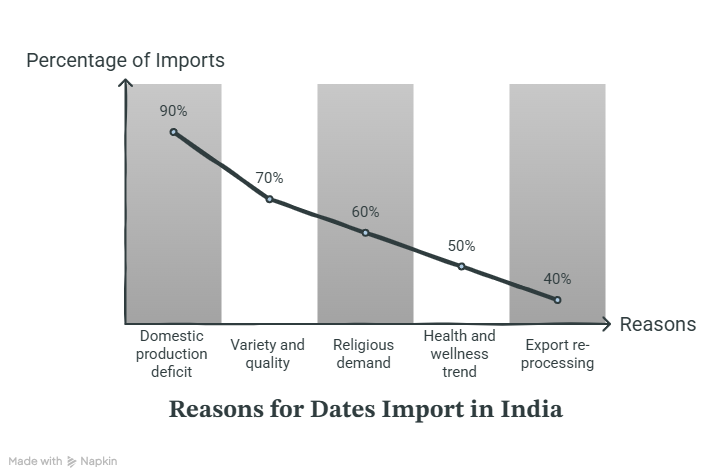
Key reasons India imports large volumes of dates include:
- Domestic production deficit — Local output covers less than 10% of national consumption.
- Variety and quality — Premium varieties like Medjool, Ajwa, Mabroom, Safawi, and Kimia are not grown domestically at commercial scale.
- Religious demand — Dates are essential during Ramadan iftar and other religious observances.
- Health and wellness trend — Consumers increasingly prefer dates as a natural sugar substitute and energy food.
- Export re-processing — Many importers pack and re-export processed date products to neighboring markets.
Dates HS Codes: Classification for Import and Export
Correct HS code classification is the first step for anyone involved in dates import in India. Using the wrong HS code can lead to customs delays, incorrect duty computation, and compliance penalties.
Primary HS Codes for Dates
| HS Code | Description | Basic Customs Duty (BCD) |
| 0804 10 00 | Dates, fresh or dried | 30% |
| 0804 10 10 | Dates (fresh or dried) — general | 30% |
| 2008 99 40 | Dates, otherwise prepared or preserved | 30–100% |
| 1904 90 00 | Date-based cereal preparations | Varies |
| 2106 90 99 | Date syrup, date paste (food preparations) | Varies |
The dates HS codes most commonly used for standard dry date imports into India fall under 0804 10 00 and its sub-headings. Always consult the latest Indian Customs Tariff and verify the applicable IGST, Social Welfare Surcharge, and any anti-dumping or countervailing duties before filing your Bill of Entry.
Customs Duty Structure for Dates Import in India
Beyond the basic customs duty, importers must account for:
- Basic Customs Duty (BCD): 30% on most date varieties
- Social Welfare Surcharge (SWS): 10% on BCD
- IGST: 5% on dates (food item category)
- Effective Duty Rate: Approximately 38–42% landed cost addition
Understanding this duty structure is critical for accurate cost modeling in dates import in India business operations.
Dates Import Data: India’s Volume and Value Trends
Dates import data reveals a consistent upward trajectory in both volume and value over the past five years. India imports hundreds of thousands of metric tonnes of dates annually, with the import value running into thousands of crore rupees.
India Dates Import Volume — Year-Wise Comparison
| Year | Approximate Import Volume (MT) | Approximate Import Value (USD Million) |
| 2020–21 | 2,85,000 | 280 |
| 2021–22 | 3,10,000 | 320 |
| 2022–23 | 3,40,000 | 365 |
| 2023–24 | 3,75,000 | 410 |
| 2024–25 | 4,00,000+ (est.) | 450+ |
This growth confirms that dates import in India is on an accelerating curve, making it an attractive segment for new market entrants and expanding traders alike.
Dates Import in India by Country: Top Supplier Nations
Understanding dates import in India by country helps buyers identify the most reliable and cost-effective sourcing origins.
Iran has historically been the largest supplier of dates to India, contributing over 60% of total import volumes in many years. Iranian varieties such as Piarom, Kimia (Mazafati), Rabbi, and Zahedi are extremely popular in Indian markets.
Saudi Arabia is the second-largest source, with premium varieties like Ajwa, Medjool, Safawi, Amber, and Sukkari commanding high prices and strong retail demand.
UAE acts as both a direct source and a re-export hub, supplying several branded and repackaged date products to Indian importers.
Iraq has been gaining market share with varieties like Zahdi and Sayer at competitive price points.
Tunisia and Egypt supply smaller but notable volumes of Deglet Noor and other varieties, particularly to industrial processors and food manufacturers.
Pakistan supplies limited volumes, primarily soft dates through the Wagah border and sea routes.
Biggest Importers of Dates in India
Knowing the biggest importers of dates in India is valuable for suppliers seeking reliable buyers, and for new traders looking to study market leaders.
The top importing entities are concentrated in:
- Mumbai and Navi Mumbai — The primary commercial hub for bulk date imports via JNPT (Jawaharlal Nehru Port Trust).
- Mundra Port (Gujarat) — Significant volumes of Iranian and Middle Eastern dates land here.
- Chennai and Tuticorin — Southern India’s gateway for date imports.
- Delhi NCR — Major distribution and wholesale hub for North India.
- Hyderabad and Kolkata — Regional hubs with strong demand from both Muslim community consumption and the general dry fruit market.
Leading categories of biggest importers of dates in India include:
- Large dry fruit trading houses with multi-commodity portfolios
- FMCG companies sourcing dates for processed food manufacturing
- Retail chains and supermarkets importing private-label date packs
- Religious organization procurement bodies buying bulk for charitable distribution
- Export-oriented packing and processing units
Platforms like VyaaparOne maintain verified, updated directories of active dates importers in India, giving suppliers and trade intelligence users instant access to buyer contact details, import volumes, and shipment history.
Khajoor Importers in India: Regional Breakdown
The term “khajoor” is widely used in North India, while “pericham pazham” is common in South India. Khajoor importers in India span every region, but concentrations differ by geography and consumption pattern.
North India Khajoor Importers
North Indian states — particularly Uttar Pradesh, Rajasthan, Punjab, Haryana, and Delhi — account for the largest consumption share. Khajoor importers in India in this belt tend to buy in very high volumes before Ramadan, and smaller quantities through the rest of the year for the general dry fruit market.
Lucknow, Kanpur, and Meerut are big hubs for distributing goods in UP, while Jaipur and Jodhpur cater to the Rajasthan market. Buyers there usually fancy Iranian Kimia dates and Saudi Ajwa for their price ranges.
Western India Khajoor Importers
Mumbai, Ahmedabad, and Surat host some of the most financially powerful khajoor importers in India. Many have direct relationships with exporters in Iran, Saudi Arabia, and UAE. Gujarat-based importers also cater to the large re-export business to East Africa and Southeast Asia.
Southern India Khajoor Importers
Kerala, Tamil Nadu, and Andhra Pradesh represent large southern markets. Kerala in particular has very high per-capita consumption of dates given its demographics. Kochi and Calicut (Kozhikode) are major import and distribution points for khajoor importers in India operating in the South.
Dates Importers Leads: How to Find Verified Buyer Data
For exporters and suppliers looking to crack the Indian market, accessing genuine dates importers leads is often the biggest challenge. The Indian market is fragmented, and many importers operate through intermediaries, making direct contact difficult without reliable trade intelligence.
Here is how serious exporters generate quality dates importers leads:
1. Shipment-Level Import Data Accessing Bill of Entry (BoE) data from Indian customs gives you shipment-level detail — importer name, IEC number, port of entry, quantity, value, and supplier country. This is the most granular and accurate form of dates import data available.
2. Trade Intelligence Platforms Platforms like VyaaparOne
aggregate and present verified dates import in India data in user-friendly formats, allowing you to filter by HS code, port, country of origin, importer name, and timeframe. This dramatically reduces lead research time.
3. Trade Associations and Chambers of Commerce FIEO (Federation of Indian Export Organizations), APEDA, and commodity-specific associations maintain databases of registered importers. These are good for initial outreach and networking.
4. B2B Trade Fairs Events like India International Trade Fair (IITF), Aahar (food and hospitality expo), and Gulfood India draw active dates importers in India and provide face-to-face networking opportunities.
5. LinkedIn and Export Portals Many mid-size importers have LinkedIn presences. Platforms like TradeIndia, IndiaMART, and ExportersIndia also list date importers, though verification levels vary.
For the most accurate and actionable dates importers leads, shipment-level data via specialized trade intelligence platforms remains the gold standard.
Dates Import in India: Port-Wise Entry Data
Port selection significantly affects cost, transit time, and compliance complexity. Here is how dates import in India is distributed across major entry points:
JNPT (Nhava Sheva), Mumbai handles the highest volume of date imports. Its proximity to major distribution markets in Maharashtra and access to cold storage and fumigation facilities makes it the preferred port for high-value date varieties.
Mundra Port, Gujarat is the second-largest port for dates import in India, particularly for bulk consignments from Iran and UAE. Its privately managed terminals offer competitive handling costs.
Chennai Port serves South Indian distribution networks and handles significant volumes from Middle Eastern origins.
Kolkata Port (Syama Prasad Mookerjee Port) caters to the Eastern India market — West Bengal, Bihar, and the Northeast.
Tuticorin (V.O.C. Port), Tamil Nadu handles additional volumes for the southern market.
ICD Tughlakabad and ICD Patparganj (Delhi NCR) function as inland container depots, receiving dates via rail from major seaports and serving the massive North Indian market.
Import and Export Regulations for Dates in India
Import Regulations:
- Dates must comply with FSSAI (Food Safety and Standards Authority of India) standards for food imports.
- A valid IEC (Importer Exporter Code) is mandatory.
- Phytosanitary certificate from the country of origin is required.
- Fumigation certificates may be required for specific origins.
- FSSAI import clearance must be obtained before goods are released from customs.
- Labeling must comply with FSSAI guidelines — country of origin, nutritional information, date of packing, expiry date, net weight.
Export Regulations (for Indian re-exporters):
- IEC required.
- APEDA registration recommended for agricultural commodities.
- Certificate of Origin from designated authority.
- Phytosanitary certificate from Plant Quarantine authorities.
Staying compliant with all import and export regulations protects you from costly delays and seizures at Indian ports.
Seasonal Patterns in Dates Import in India
Dates import in India follows distinct seasonal rhythms that smart traders use to plan procurement and cash flow:
Pre-Ramadan Peak (January–March): The most intense import season. Importers rush to stock warehouses before Ramadan begins. Freight rates spike, and premium varieties from Saudi Arabia and Iran are in heavy demand. Dates importers leads are most active during this window.
Ramadan Period (March–April, varies by year): Clearances and deliveries peak. Retail prices are at their highest. Much of the dates import in India volume clears customs during this month.
Post-Ramadan Slowdown (May–June): Import activity slows as inventories are drawn down and summer heat reduces fresh date perishability.
Festive Pre-stocking (August–October): Importers begin restocking before Diwali, Navratri, and the winter season. Dry dates and gift-pack varieties dominate.
Year-End Push (November–December): Christmas, New Year’s gifting, and the wedding season drive a second smaller peak in dates import in India activity.
How VyaaparOne Helps Dates Importers and Exporters
VyaaparOne is a B2B trade intelligence platform for India’s import-export world. It’s great for folks in the date imports sector—suppliers, buyers, brokers, or trade finance pros—offering them useful tools, so their work gets easier.
- Verified Importer Directory: Access a curated list of active dates importers in India with contact details, IEC numbers, and shipment history.
- Shipment-Level Import Data: Drill into dates import data at the transaction level — who imported what, from where, in what quantity, and at what declared value.
- Dates Importers Leads: Generate targeted dates importers leads filtered by port, origin country, HS code, and import frequency.
- HS Code Intelligence: Quickly look up correct dates HS codes, applicable duty rates, and recent ruling changes.
- Competitor Analysis: See how competitor importers are sourcing — origin countries, freight forwarders, ports used, and pricing trends.
- Export Leads: For Indian dates processors and packers looking to export, VyaaparOne also provides verified international buyer data.
For dates import in India intelligence, VyaaparOne is the most comprehensive and reliable platform available to the Indian trade community.
Biggest Challenges in Dates Import in India
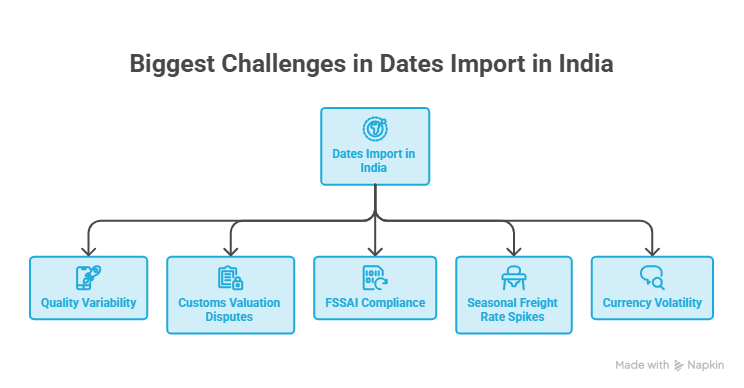
Even experienced importers face recurring challenges in dates import in India:
Quality Variability: Date quality varies significantly between harvests and even within the same variety. Moisture content, sugar crystallization, and pest damage are common quality concerns that arise during customs inspection.
Customs Valuation Disputes: Indian customs might double-check your declared invoice values, especially for Iranian dates, and bump up those estimates. Proper docs like third-party certs and legit supplier invoices are key here.
FSSAI Compliance: Changing food safety norms and mandatory testing requirements can cause clearance delays. Working with experienced customs house agents (CHAs) who specialize in food imports is strongly recommended.
Seasonal Freight Rate Spikes: Pre-Ramadan demand pushes freight rates on Iran–India and Gulf–India routes significantly higher, compressing margins for importers who don’t book early.
Currency Volatility: Given that most dates import in India transactions are denominated in USD, rupee depreciation can materially affect landed cost calculations.
Dates Import in India: Future Outlook for 2026
The dates import in India market is set for continued expansion in 2026 and beyond. Several macro trends are converging to drive sustained growth:
- Rising disposable incomes and premiumization of the dry fruit category
- Growing Muslim population and deepening penetration of Ramadan gifting culture
- Increased awareness of dates as a health food — diabetes-friendly, high in fiber, and antioxidant-rich
- E-commerce growth enabling direct-to-consumer branded date products
- Food processing industry expansion creating B2B bulk demand
Importers who leverage accurate dates import data, maintain strong supplier relationships in Iran and Saudi Arabia, and access verified dates importers leads through platforms like VyaaparOne will be best positioned to capitalize on this growth.
Conclusion
Dates import in India represents one of the most dynamic, high-volume, and seasonally rich segments of the Indian agricultural trade ecosystem. From understanding the correct dates HS codes and customs duty structures to identifying the biggest importers of dates in India and generating actionable dates importers leads, success in this market demands both data precision and market intelligence.
The dates import in India sector will continue to grow through 2026 as demand from consumers, food processors, and institutional buyers keeps rising. Whether you are a foreign exporter looking to enter the Indian market, a domestic importer optimizing sourcing, or a trade finance provider assessing credit exposure — VyaaparOne gives you the dates import data, importer directories, and buyer leads you need to make confident decisions.
Explore verified khajoor importers in India, track dates import in India by country, and unlock comprehensive import and export intelligence at VyaaparOne — India’s most trusted B2B trade intelligence platform.
Frequently Asked Questions
Q1. What is the HS code for dates import in India?
The primary HS code for dates import in India is 0804 10 00, covering fresh or dried dates. Sub-classifications may apply based on whether the dates are fresh, dried, pitted, or processed.
Q2. What is the import duty on dates in India?
The basic customs duty on dates is 30%. After adding Social Welfare Surcharge (10% on BCD) and IGST (5%), the effective landed cost addition is approximately 38–42%.
Q3. Which country is the largest exporter of dates to India?
Iran is the largest exporter, followed by Saudi Arabia and the UAE. Dates import in India by country data consistently shows Iran contributing 55–65% of total volumes.
Q4. Who are the biggest importers of dates in India?
The biggest importers of dates in India are concentrated in Mumbai, Mundra, Hyderabad, and Delhi NCR. They include large dry fruit trading houses, FMCG companies, and processing-and-packing units.
Q5. How can exporters get dates importers leads in India?
Exporters can access verified dates importers leads through trade intelligence platforms like VyaaparOne.com, which provides shipment-level import data and importer contact details filtered by HS code, port, and origin country.
Q6. What documents are required for dates import in India?
Key documents include: Bill of Lading, Commercial Invoice, Packing List, Phytosanitary Certificate, Certificate of Origin, FSSAI Import Clearance, and IEC of the importer.
Q7. What varieties of dates are most commonly imported into India?
The most commonly imported varieties are Kimia/Mazafati (Iran), Ajwa (Saudi Arabia), Medjool (multiple origins), Zahdi (Iraq), and Mabroom (Saudi Arabia).